
Pauline Ferrières and Zhang Xing
LIVING WITH THE ELEMENTS
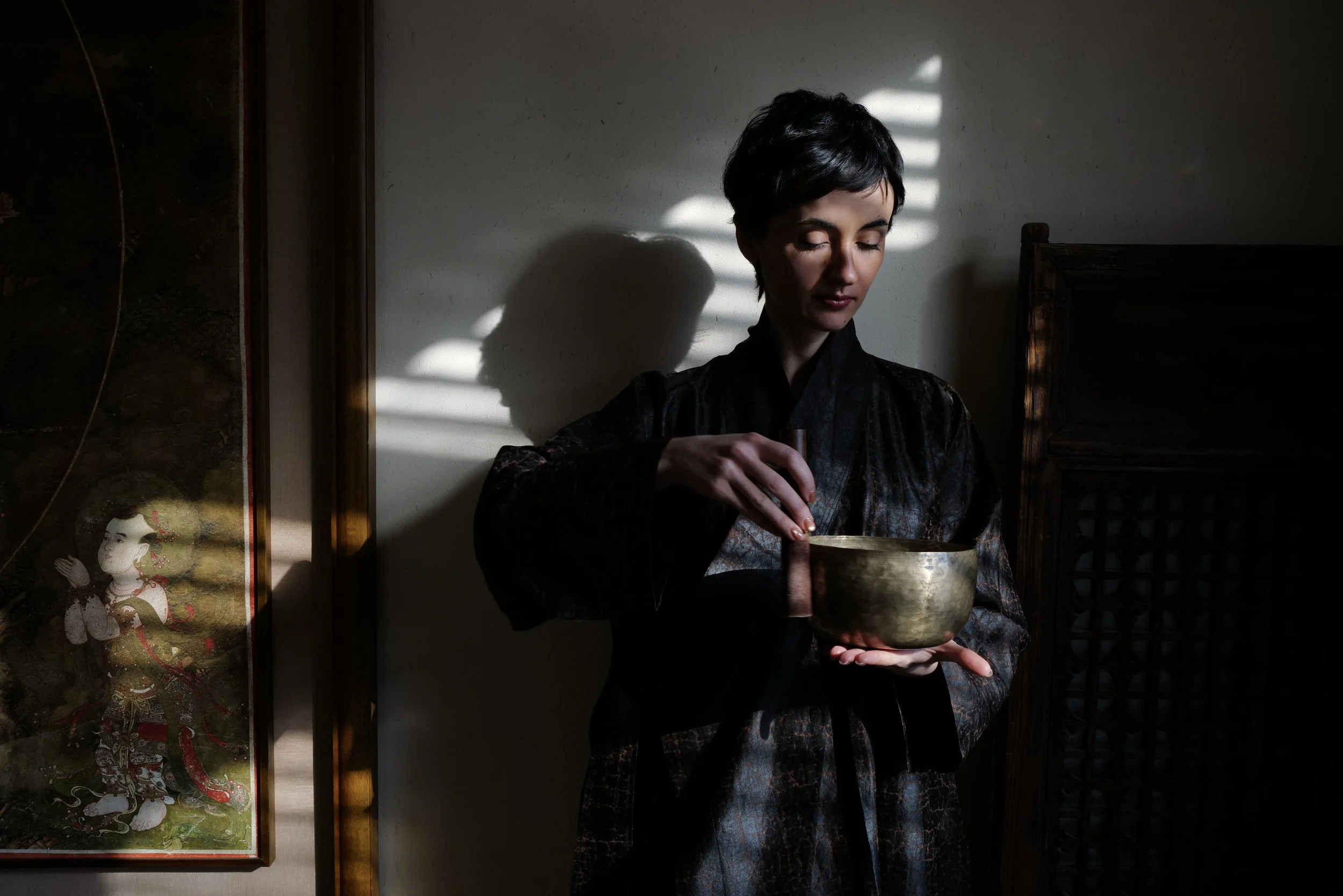
Nestled in the mountains along the Great Wall of China, Pauline Ferrières and Zhang Xing have created a world where daily life unfolds through ritual, silence, and attention.
Their home, designed by Zhang Xing, is more than a place to live. It is an environment conceived to support presence. Every material, every shadow, every gesture seems to participate in a quiet search for balance. As an interior designer, Zhang Xing approaches space as a living field. A room can calm the body or disturb it. It can gather the mind or scatter it. Through Feng Shui, natural materials, proportion, and light, he creates interiors that allow the nervous system to settle.
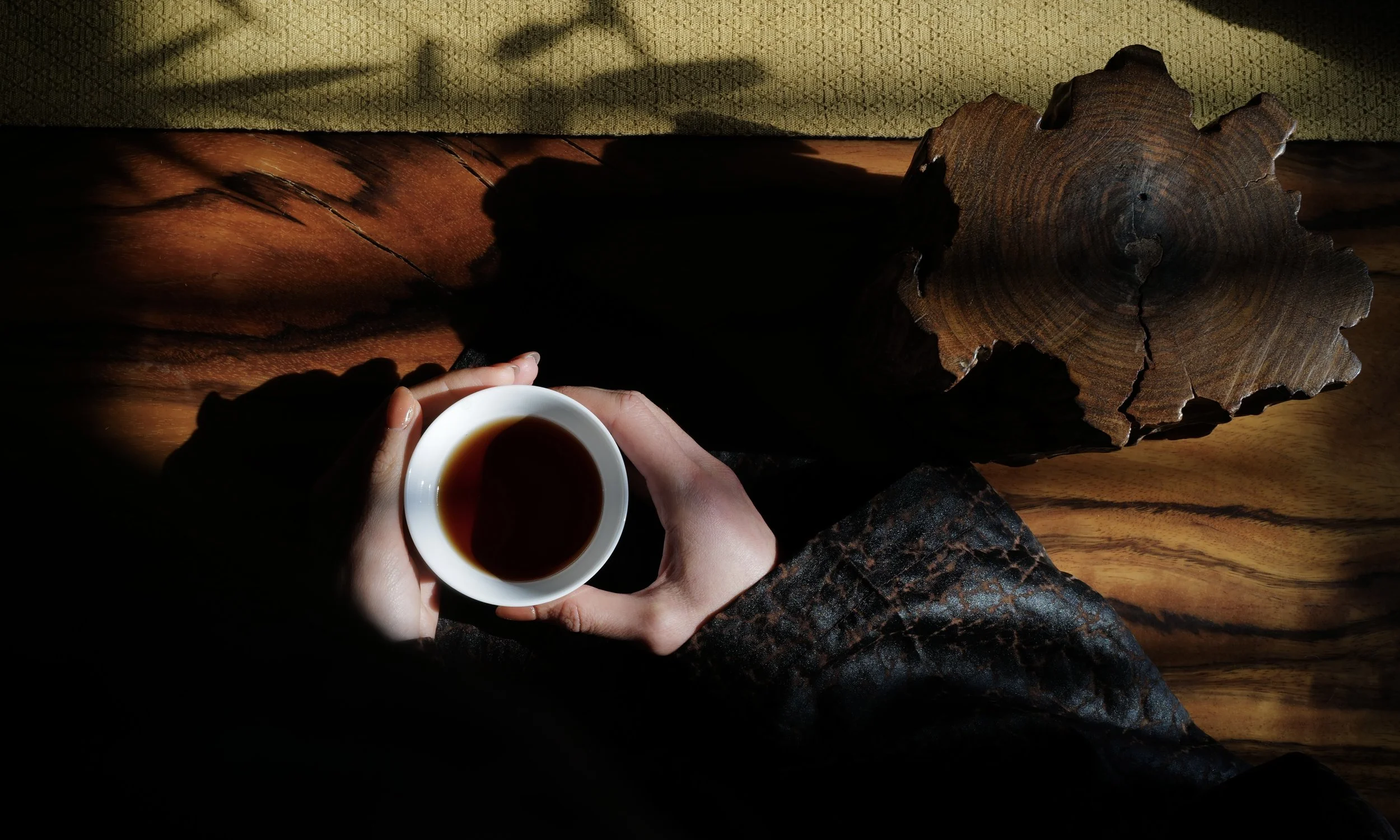
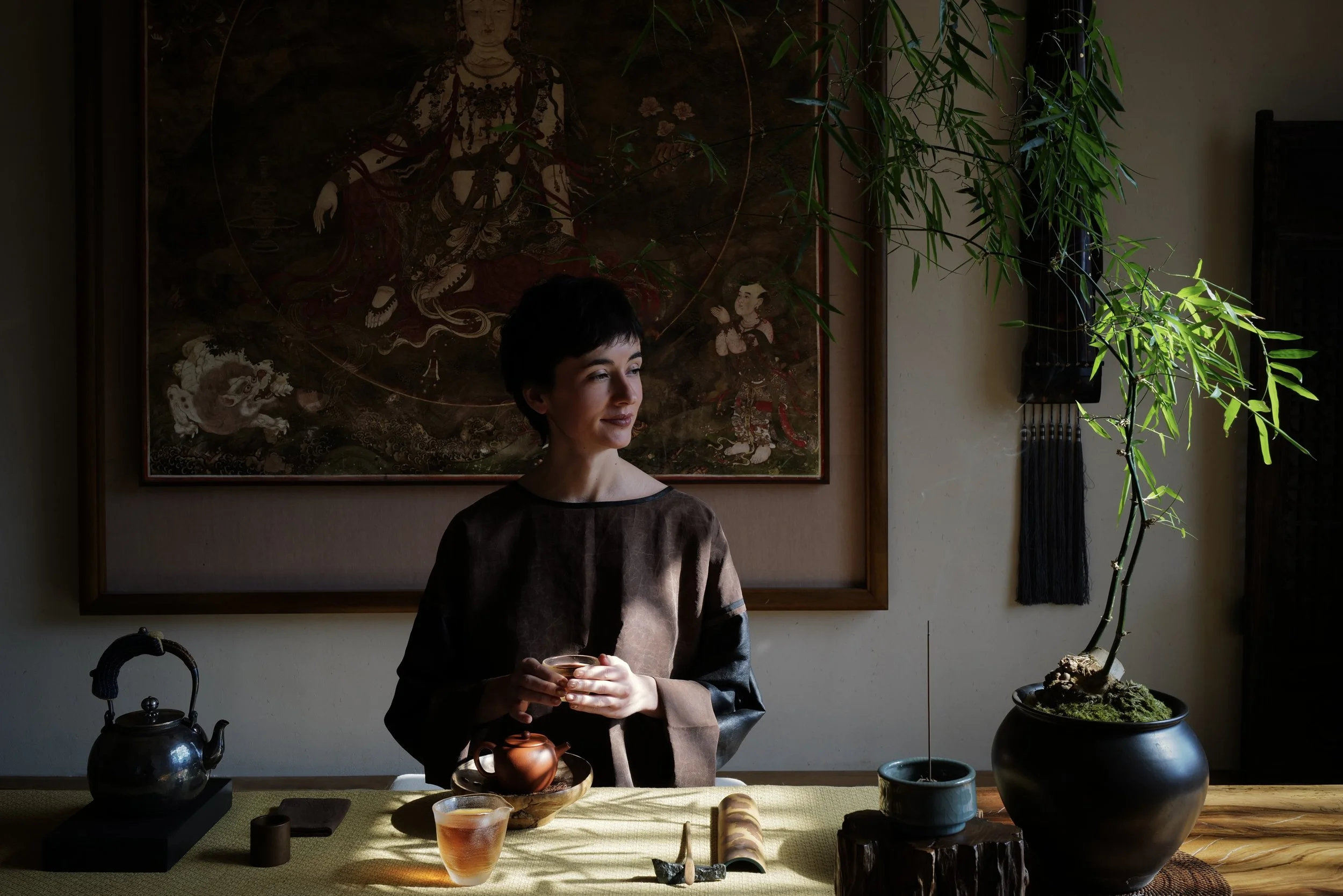
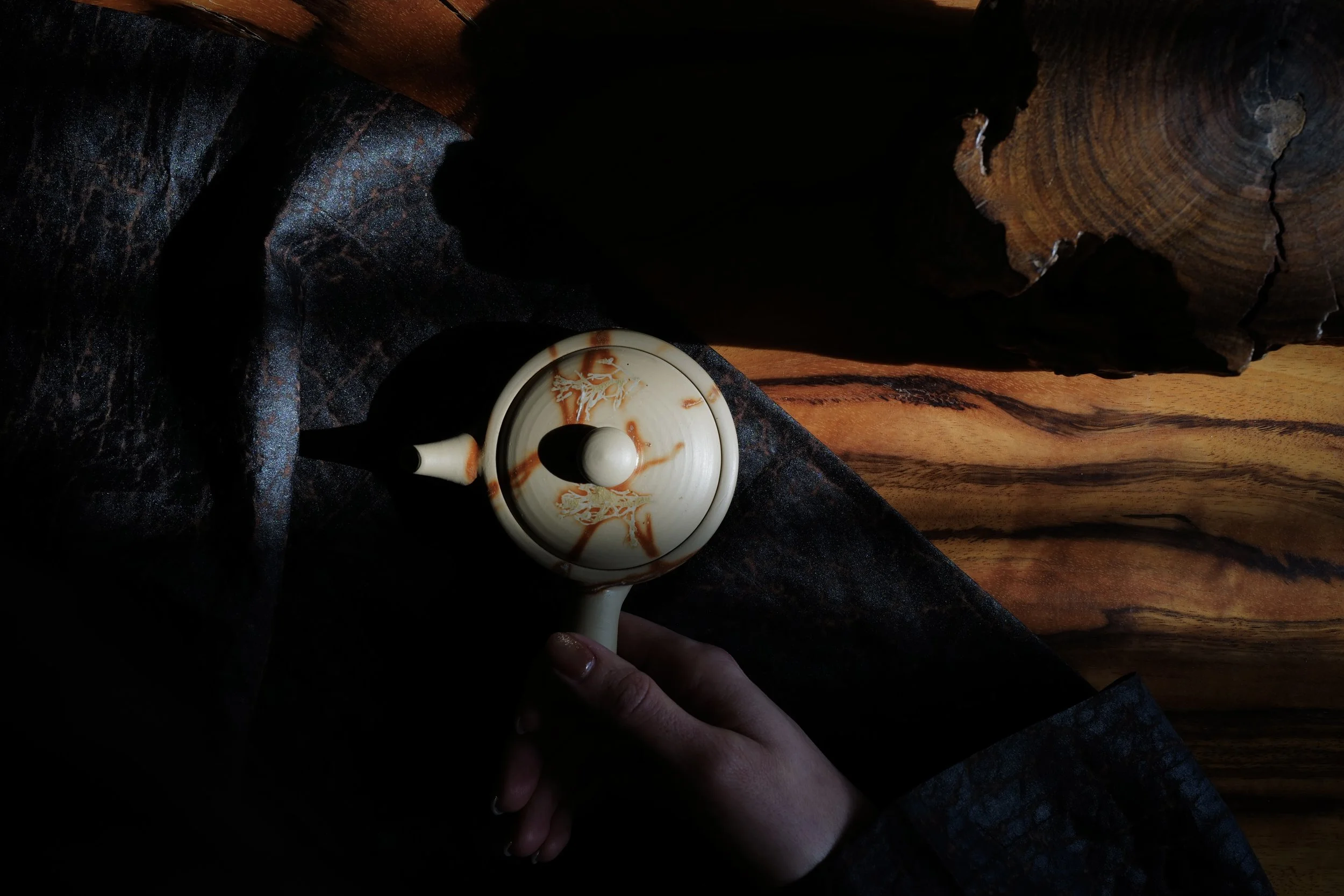
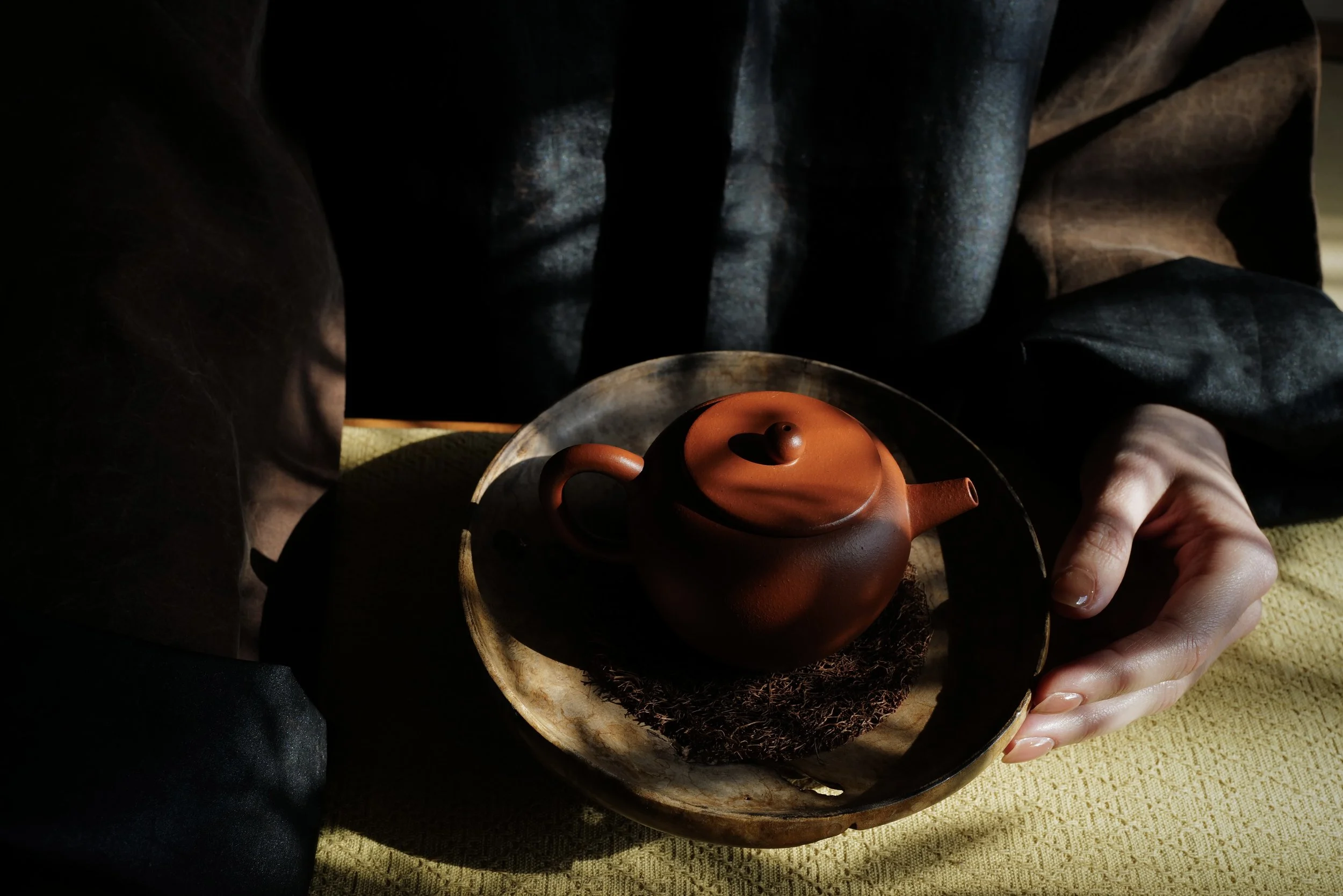
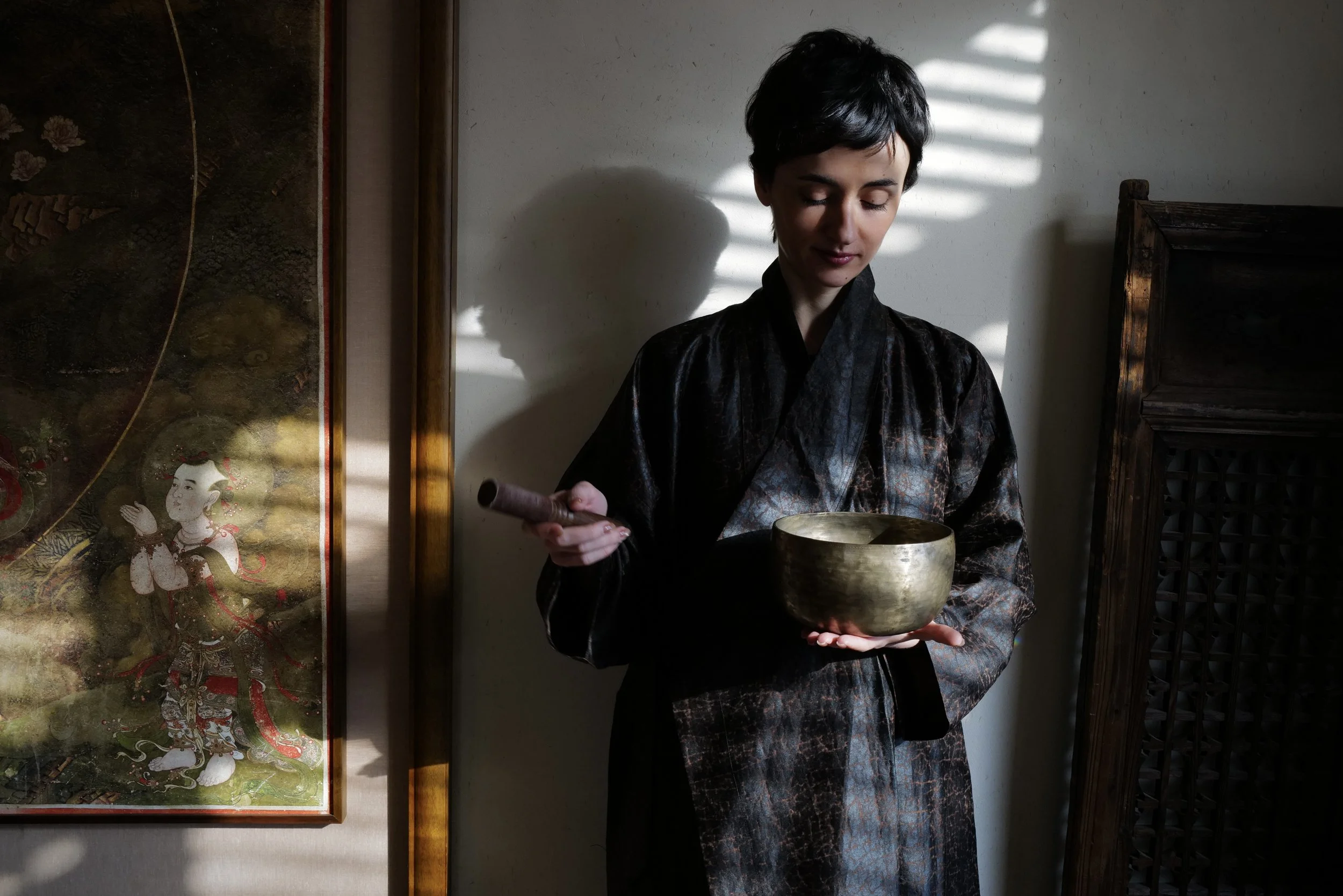
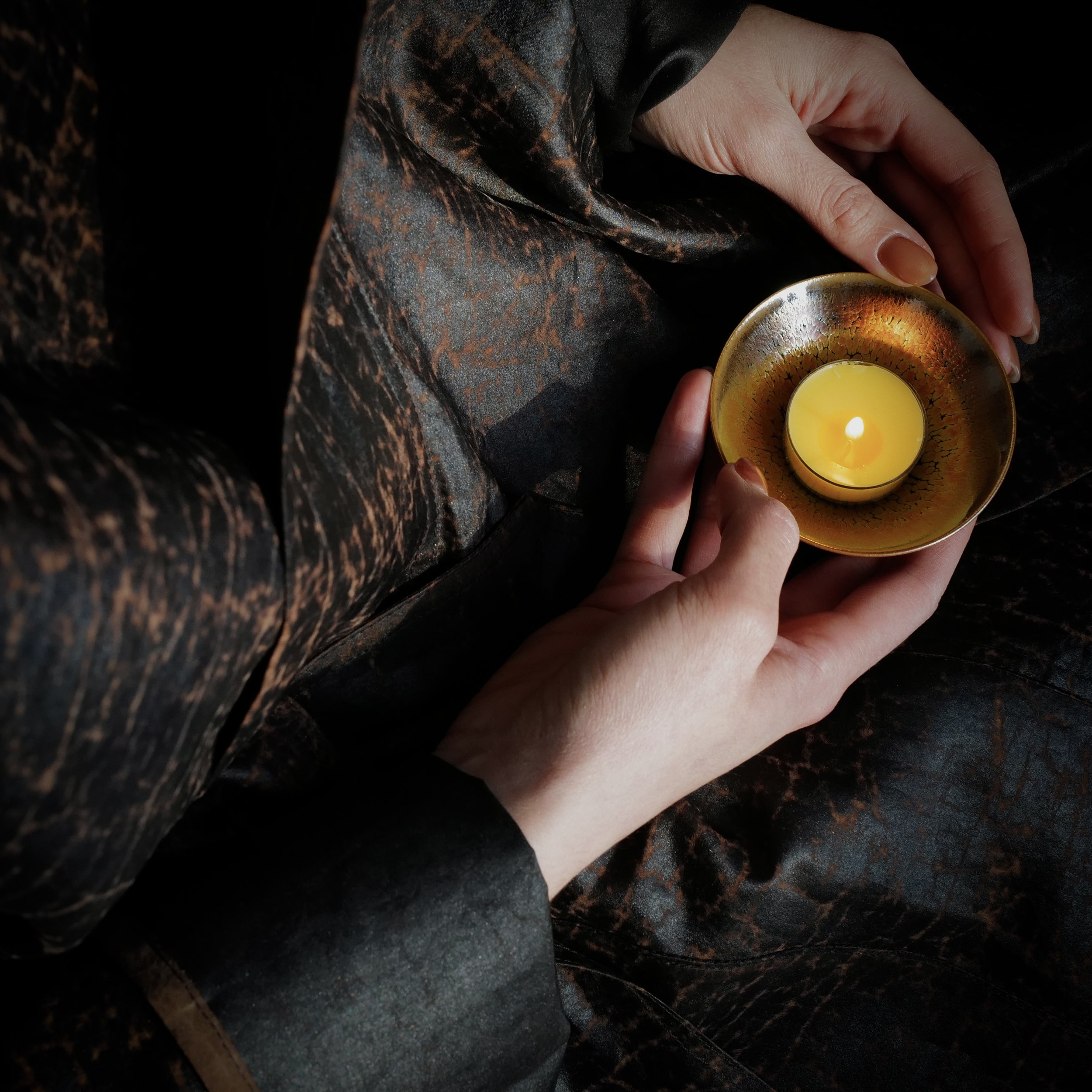
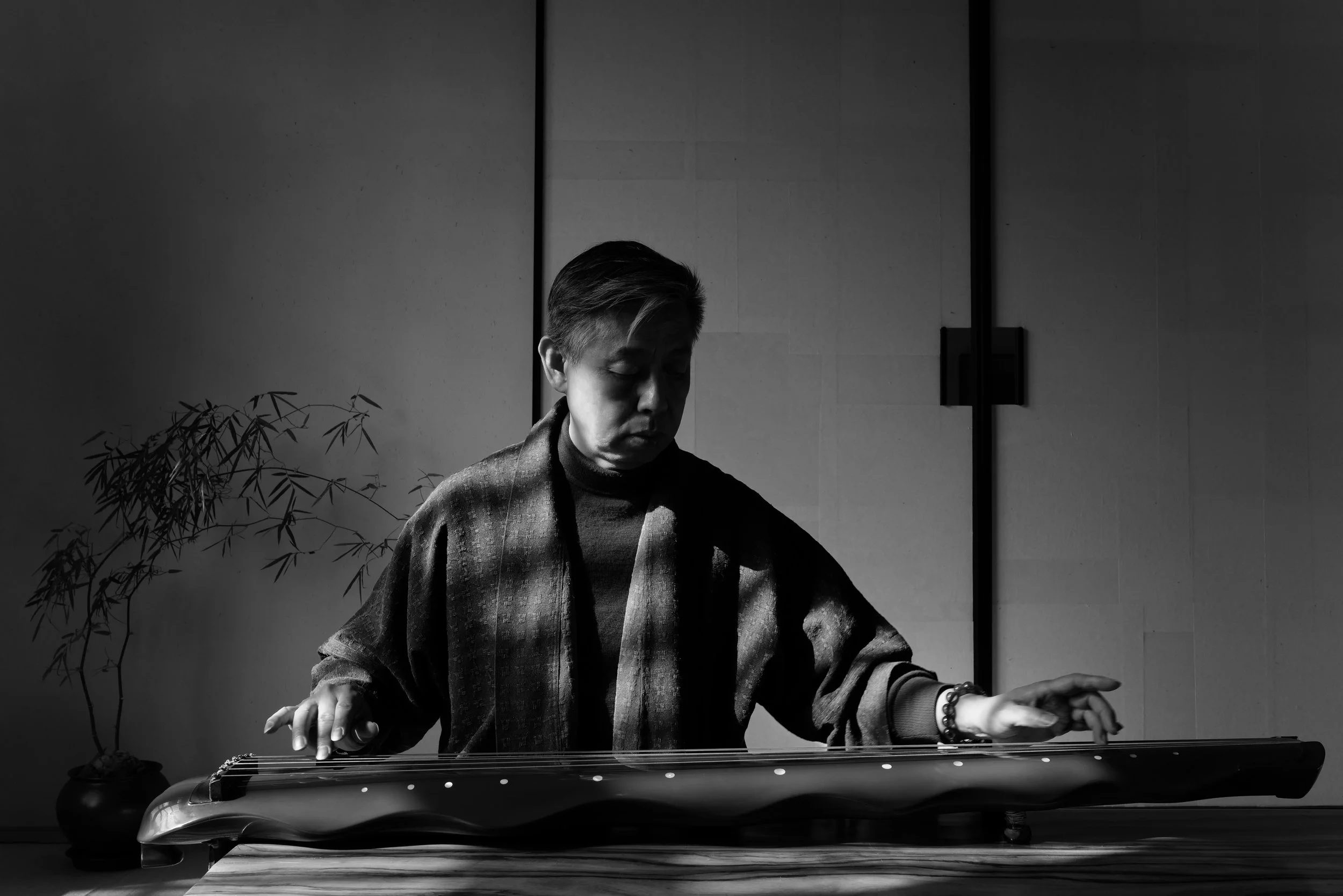
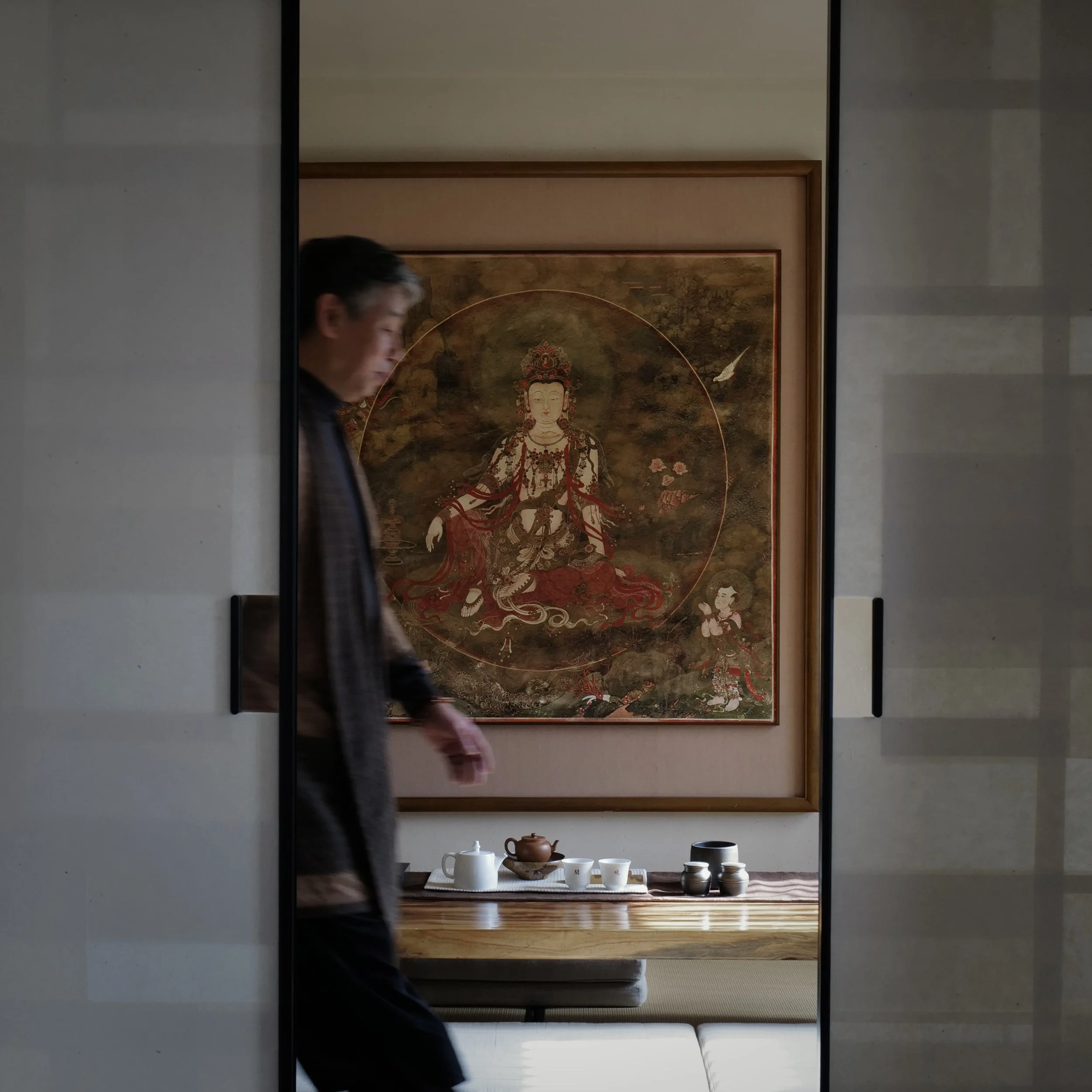
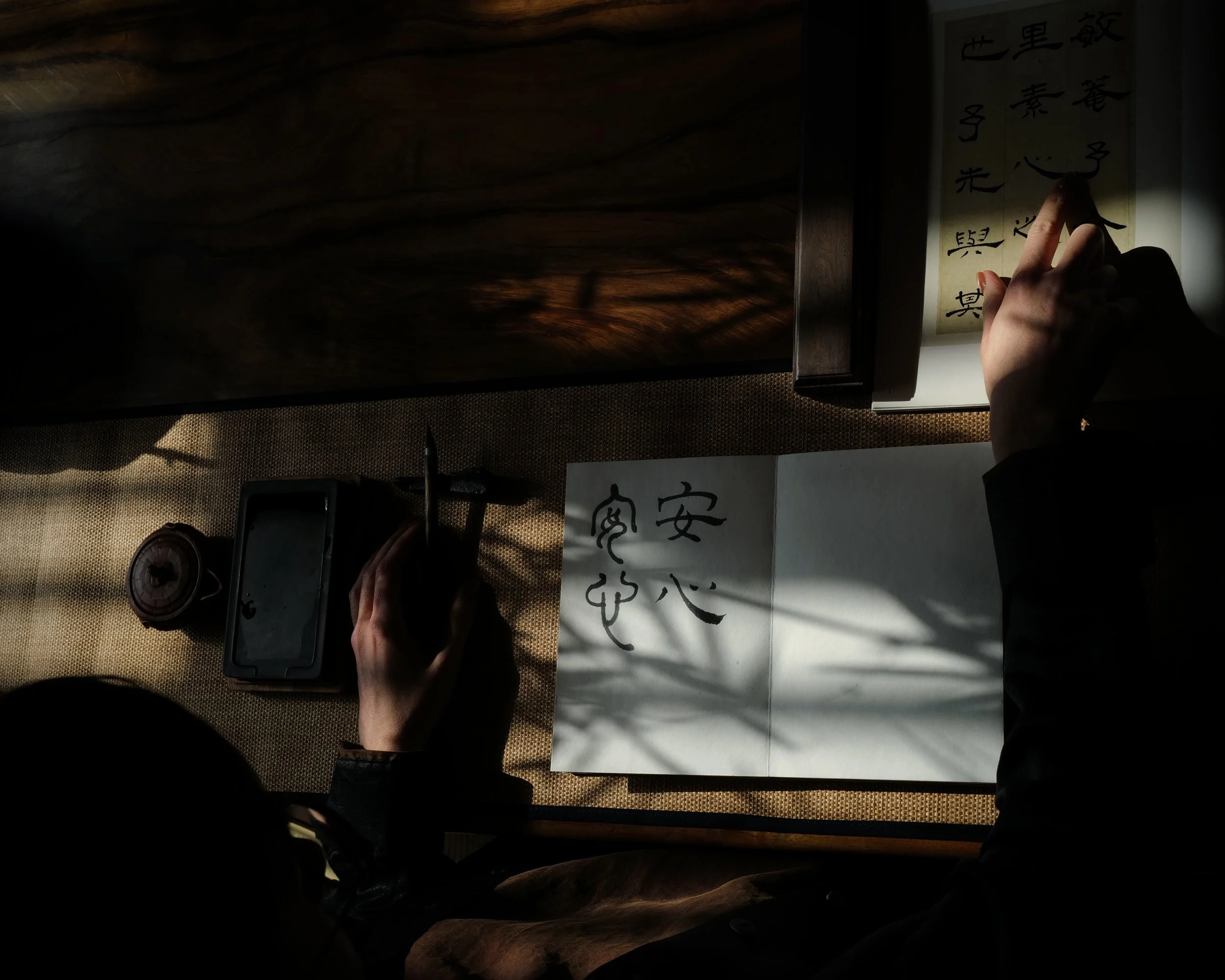
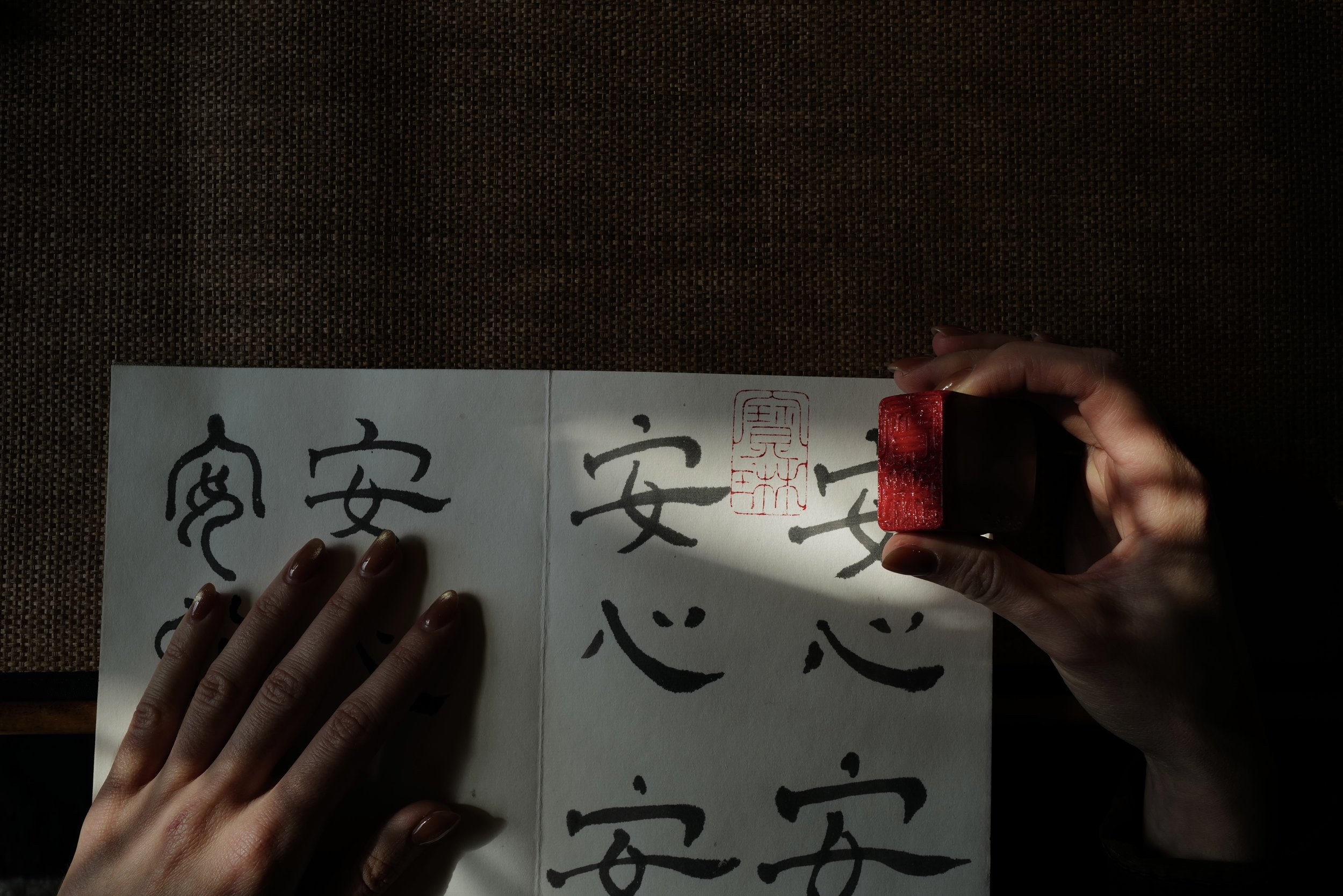
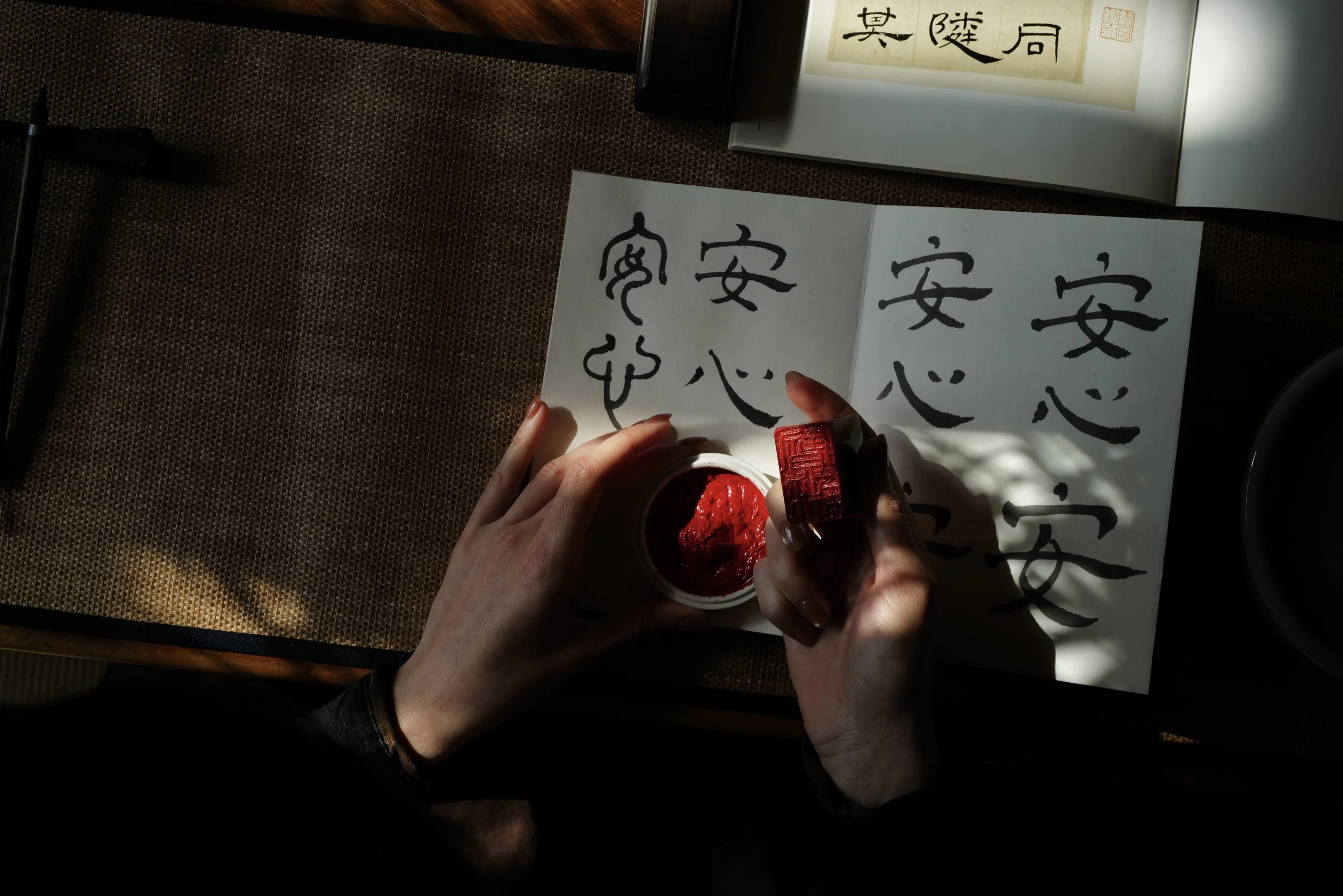
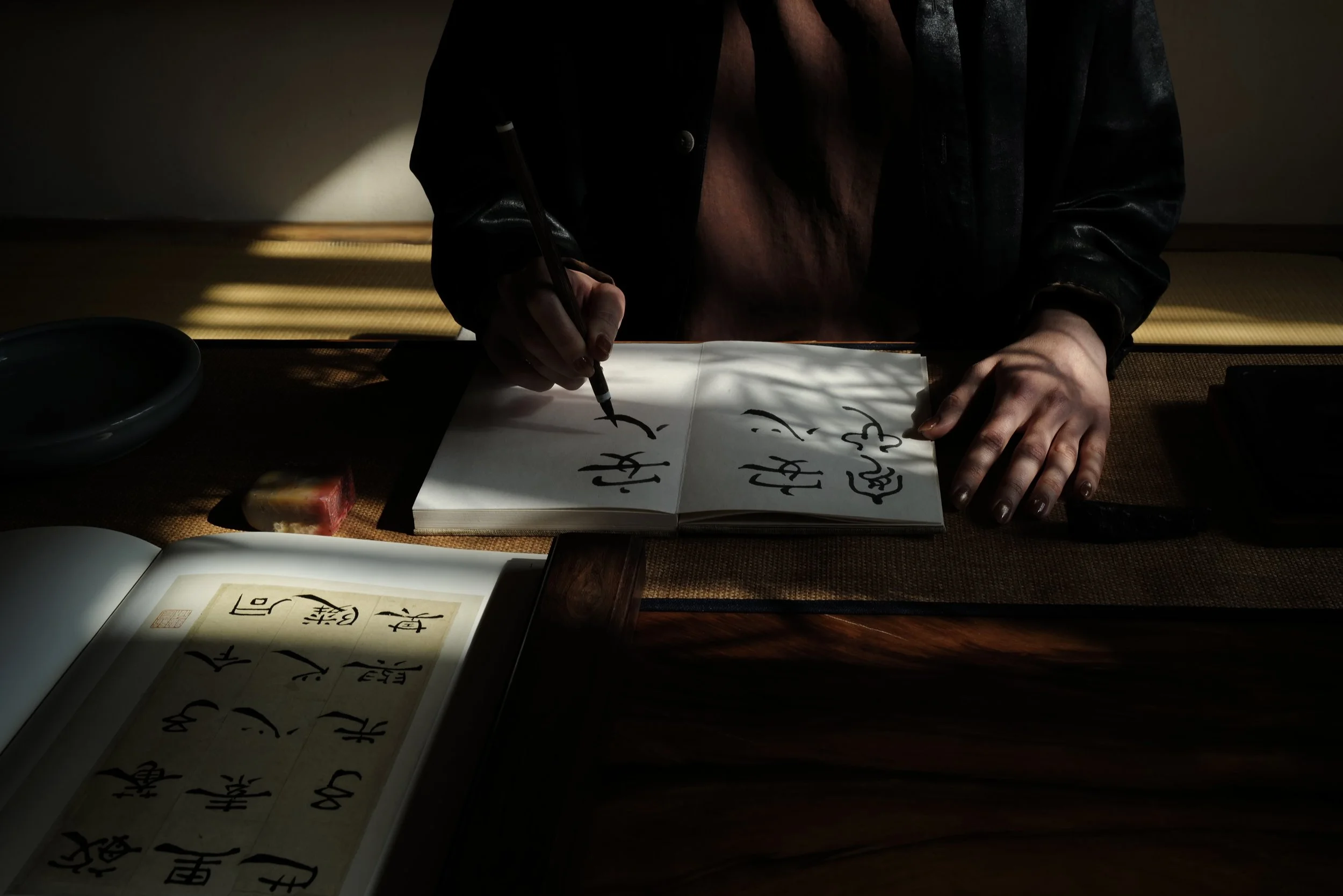
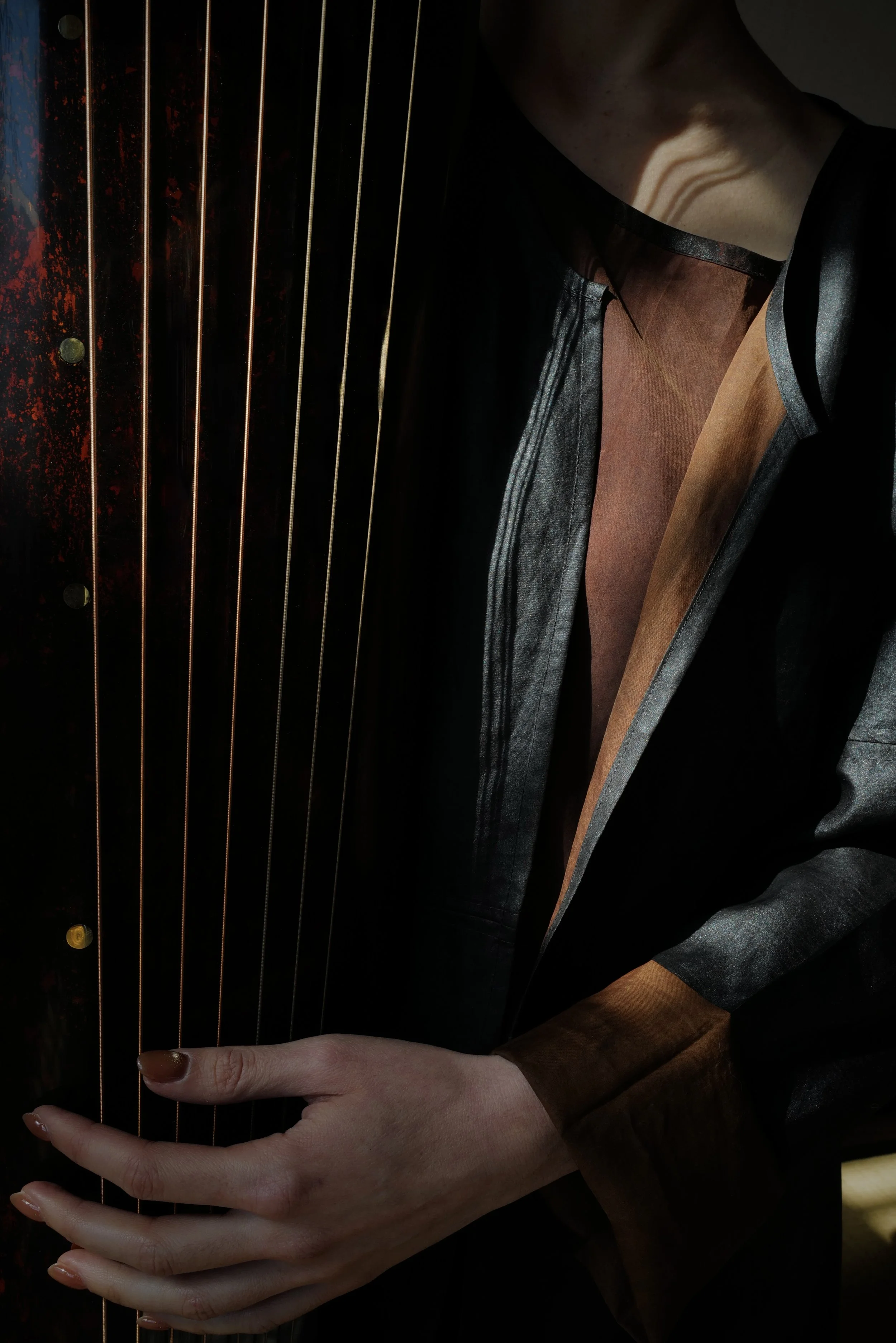
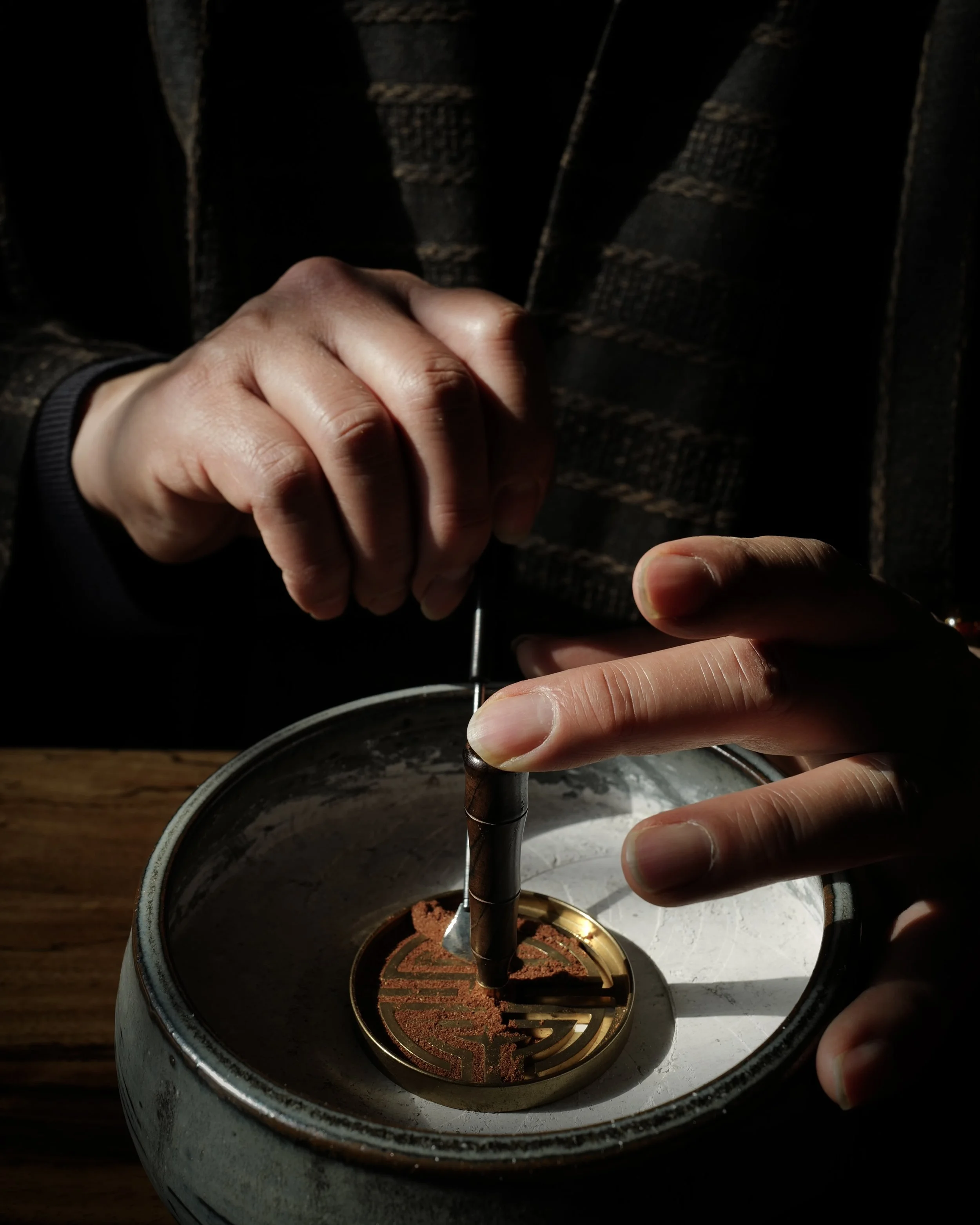
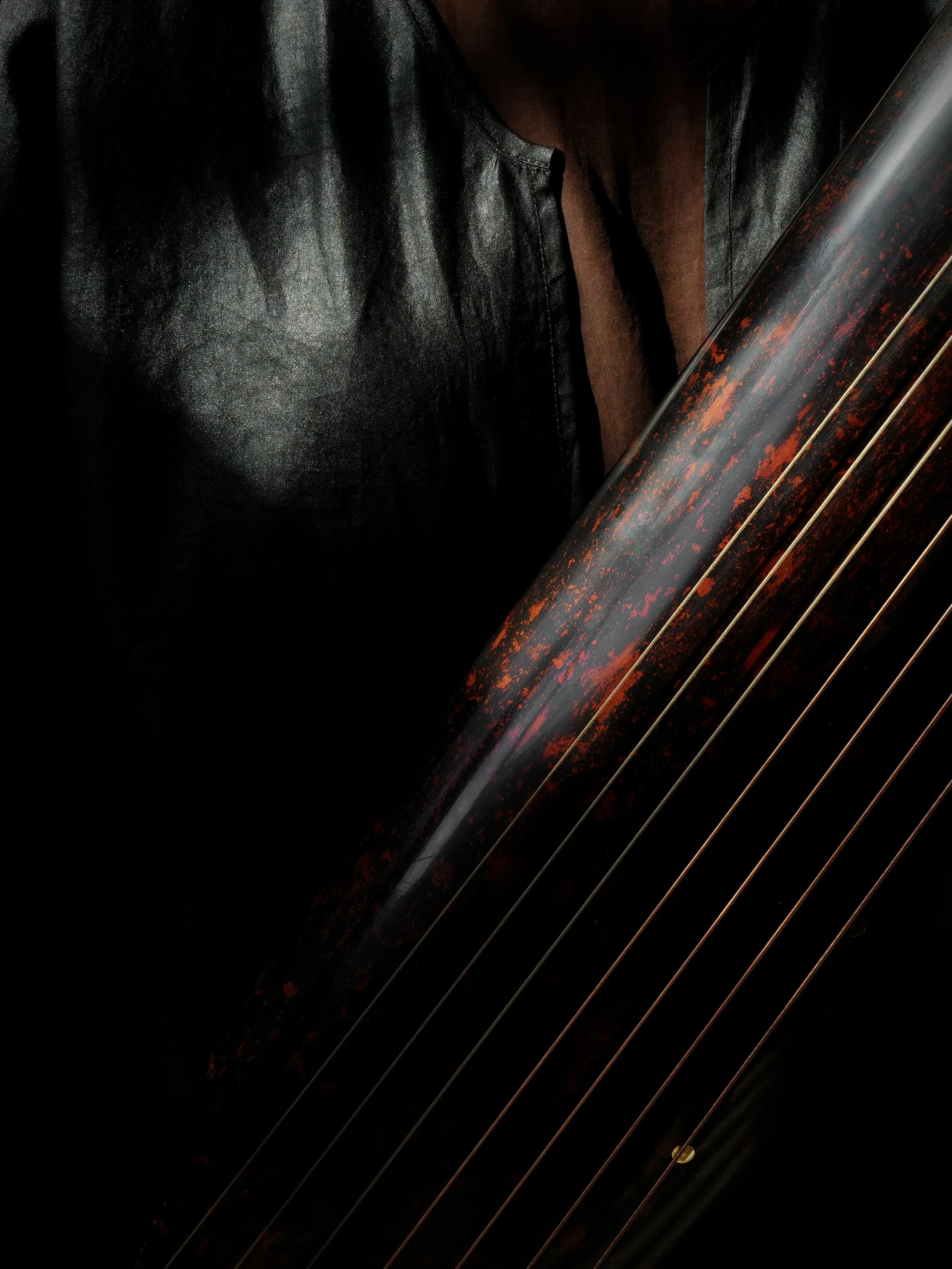
At the center of their home is the tea space. Here, time slows down. Tea is prepared with patience. Medicinal incense rises into the air. Ink moves across paper. The sound of the guqin reverberates softly through the room.
These are practices of cultivation. In Chinese tradition, tea, calligraphy, incense, and music have long been understood as pathways toward inner harmony. Together, they create an atmosphere where beauty is not separate from daily life, but woven into the way one breathes, listens, and inhabits the world.
For Pauline, who came to China from France, these traditions revealed a deeper intelligence within Chinese culture. Beyond the narratives of speed, industry, and geopolitical tension, she encountered a country shaped by ancient systems of knowledge, subtle practices, and living relationships with nature.
Together, Pauline and Zhang Xing offer another way of seeing China: as a living culture of gestures, materials, rituals, and elemental wisdom.
CLOTH AS A LIVING ARCHIVE
Through the cultural journeys they curate across China, Pauline Ferrières and Zhang Xing invite others to encounter traditions that remain profoundly alive.
Their path has led them to tea masters, artisans, mountain communities, and makers whose knowledge has been transmitted through generations. Among these encounters, the textile cultures of Guizhou have held a particular place. Working with indigenous communities to preserve ancestral weaving traditions, Pauline discovered that cloth can carry far more than function.
For many of these communities, textile is language. Patterns hold stories. Fibers carry blessings. Weaving becomes a form of devotion. In places where knowledge has often been passed without written script, cloth becomes an archive of memory, cosmology, and belonging.
This sensitivity to the life of materials resonates deeply with NOIR.
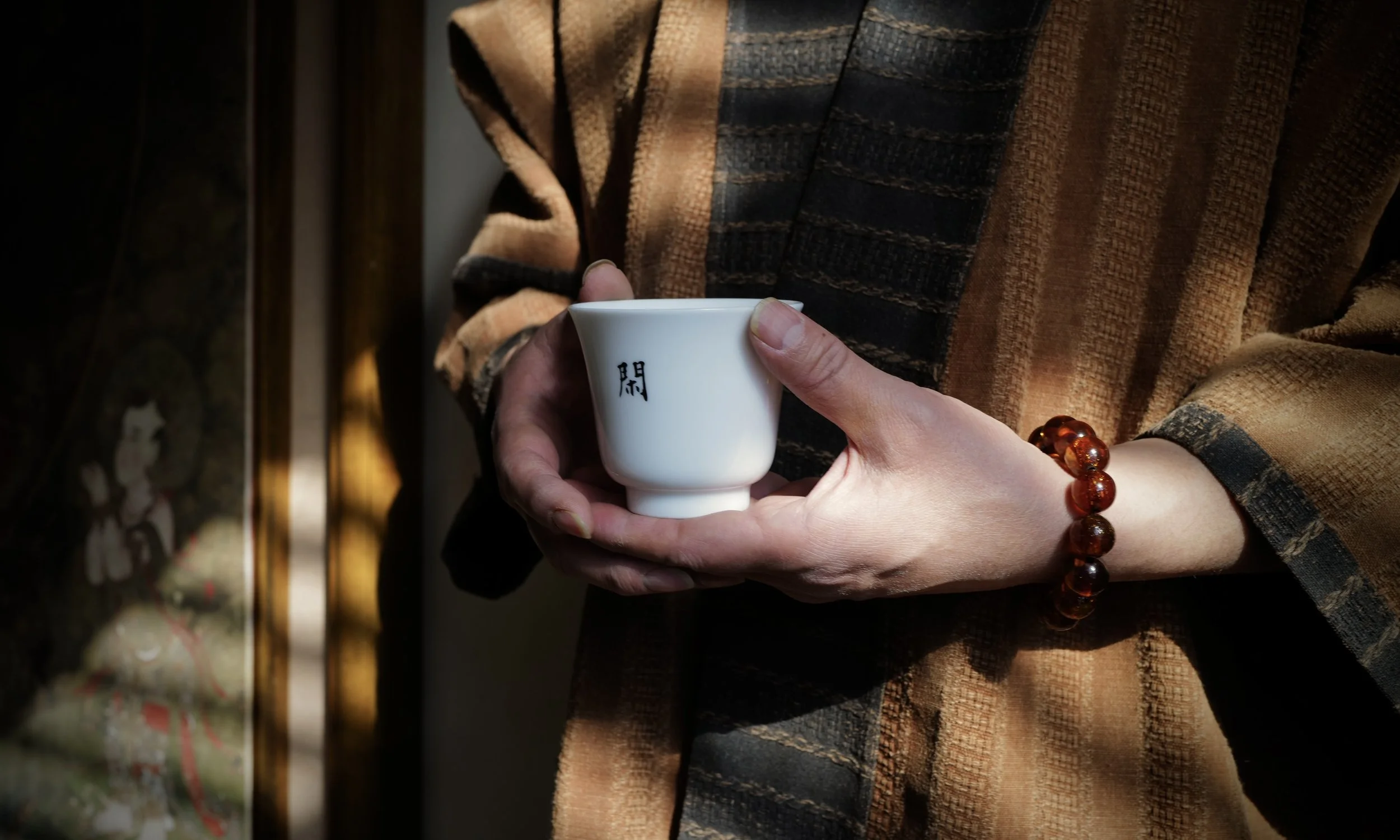
Mud silk, traditionally known in China as Xiangyunsha, is one of the most remarkable textiles in the history of silk. Sometimes referred to as tea silk, it carries warm amber and earthy tones that seem to hold the memory of aged tea, river mud, sunlight, and time.
Its making is a slow collaboration with nature. Silk is dyed with plant tannins extracted from wild yam roots, coated with mineral-rich river mud, washed, dried, and exposed repeatedly to the sun. Through this process, the fabric is transformed by the elements: wood, earth, water, metal, and fire.
The result is a textile that feels alive. Its surface is irregular, luminous, and grounded. It carries trace, depth, and atmosphere.
Like tea, mud silk reveals itself slowly. It asks for patience. It belongs to a world where beauty is not produced by speed, but by repetition, attention, and the intelligence of natural processes.
GARMENTS FOR RITUAL LIFE
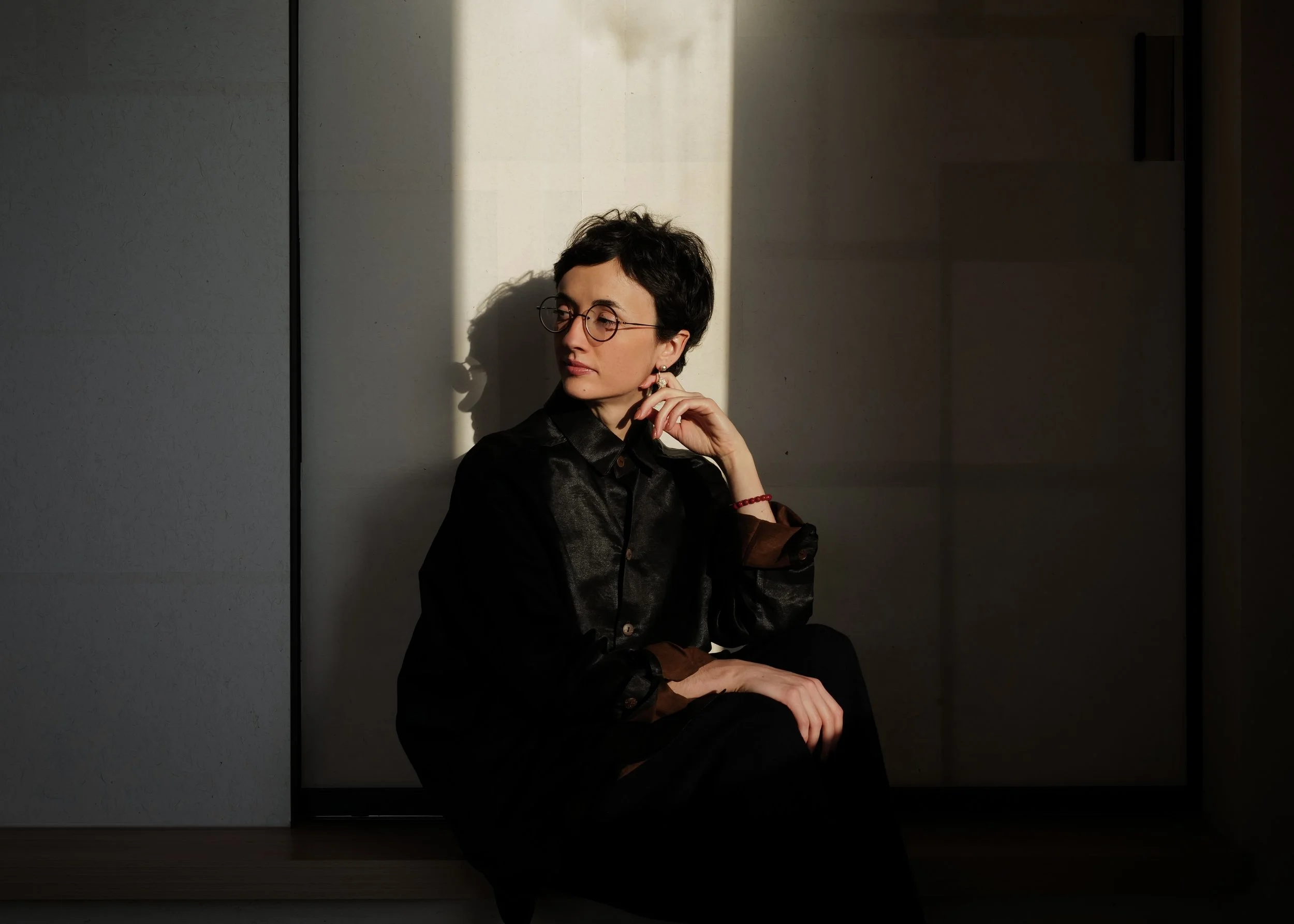
In Pauline and Zhang Xing’s tea space, NOIR garments appear as companions in a way of life.
They move with the body. They respond to light and shadow. They sit naturally among wood, incense, tea, ink, silence, and sound. Nothing feels imposed. The cloth simply belongs.
For Pauline, this connection is also energetic. In Chinese metaphysics, her Day Master is Yang Earth, symbolized by the mountain. Earth represents grounding, nourishment, stability, and the capacity to hold. This is why mud silk feels so close to her own constitution. It is a fabric literally shaped by earth: by river mud, minerals, plant roots, and the slow rhythm of natural transformation.
When worn on the skin, the garment becomes part of the body’s environment. In Chinese thought, materials are not inert. They carry qualities that interact with the body and the world around it. Natural silk, shaped by plant dyes and elemental processes, holds a different presence from synthetic fabrics produced through industrial speed.
The reversibility of NOIR’s garments also speaks to this philosophy. A single piece can reveal different faces depending on how it is turned, folded, or layered. This fluidity echoes yin and yang: the understanding that transformation is constant, and that apparent opposites belong to the same whole.
For Zhang Xing, this sensibility finds another echo in the guqin. The ancient instrument is played for inner listening. Its sound unfolds slowly, allowing silence to breathe around each note. Like a room designed with harmony, like tea prepared with awareness, like cloth shaped by earth and sunlight, the guqin becomes a way of returning the body to balance.
In this world, clothing does not seek attention. It supports presence.
@pauline.ferrieres