
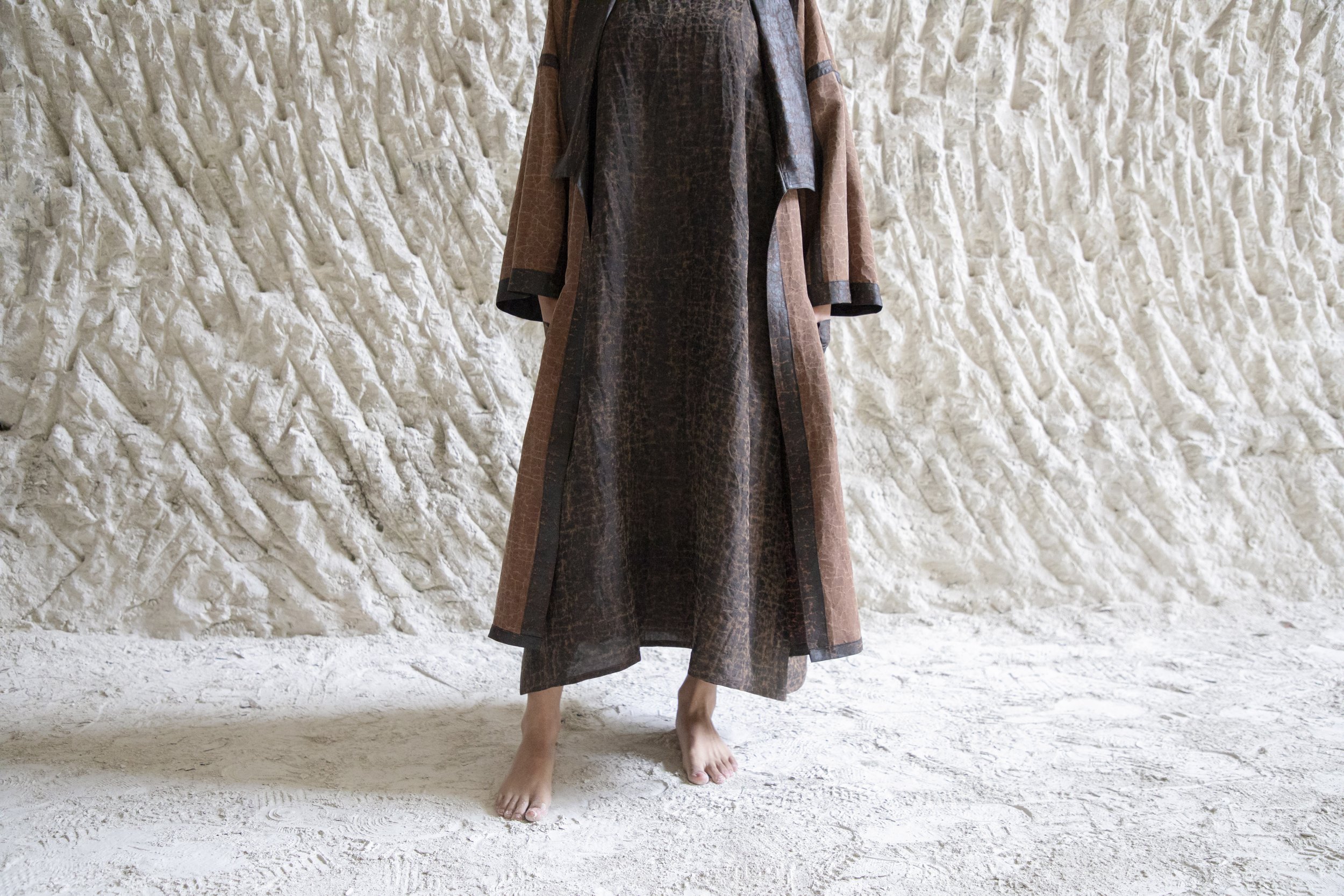


A new series by NOIR that turns the gaze outward, to the eyes that interpret, translate, and refract its world.
Each chapter of SEEN invites an artist, a photographer, or a maker to hold the cloth in their own light. What they reveal is not fashion, but presence: how form converses with place, how texture becomes language, how time leaves a trace.
SARA MENESES CUAPIO
Photographed at Minas de Tiza, San Mateo Huexoyucan, Panotla, Tlaxcala
In Tlaxcala’s dry white hills, inside the hollowed silence of the Minas de Tiza, Sara Meneses Cuapio built a dialogue between matter and ancestry. The mine’s walls, chalk, lime, bone, glowed like memory in mineral form. Within that glow, NOIR’s garments moved like slow shadows, their darkness neither contrast nor costume, but continuation.


On her grandmother’s land, rooted in Nahua lineage, Sara carries her work as inheritance and invocation.
“My work focuses on exploring the memory of my blood. I’m the daughter of a mestizo father and a Nahua mother.”
From this crossing, she studies the living tension between identity and loss, ritual and renewal, nature and the human need to name it.
Her images hover between documentary and dream. She works through writing first, each photograph preceded by a text, a whispered sketch of meaning.Then the image arrives, its edges blurred by breath, as if remembering were a physical act. What she calls “the memory of my blood” becomes visible in that haze: a refusal of erasure, an insistence on the right to opacity — the right to shape memory and meaning on one’s own terms, beyond the clarity demanded by others.
Night is her true territory. It’s not absence but expansion, a realm where the seen and unseen shift places. In this darkness, myths breathe, and what is socially fixed begins to loosen. Sara’s palette turns away from spectacle: color stripped to essentials, light used like a scalpel. Against the common idea that Mexico must always speak in brightness, she answers with shade—ancestral, patient, unafraid.
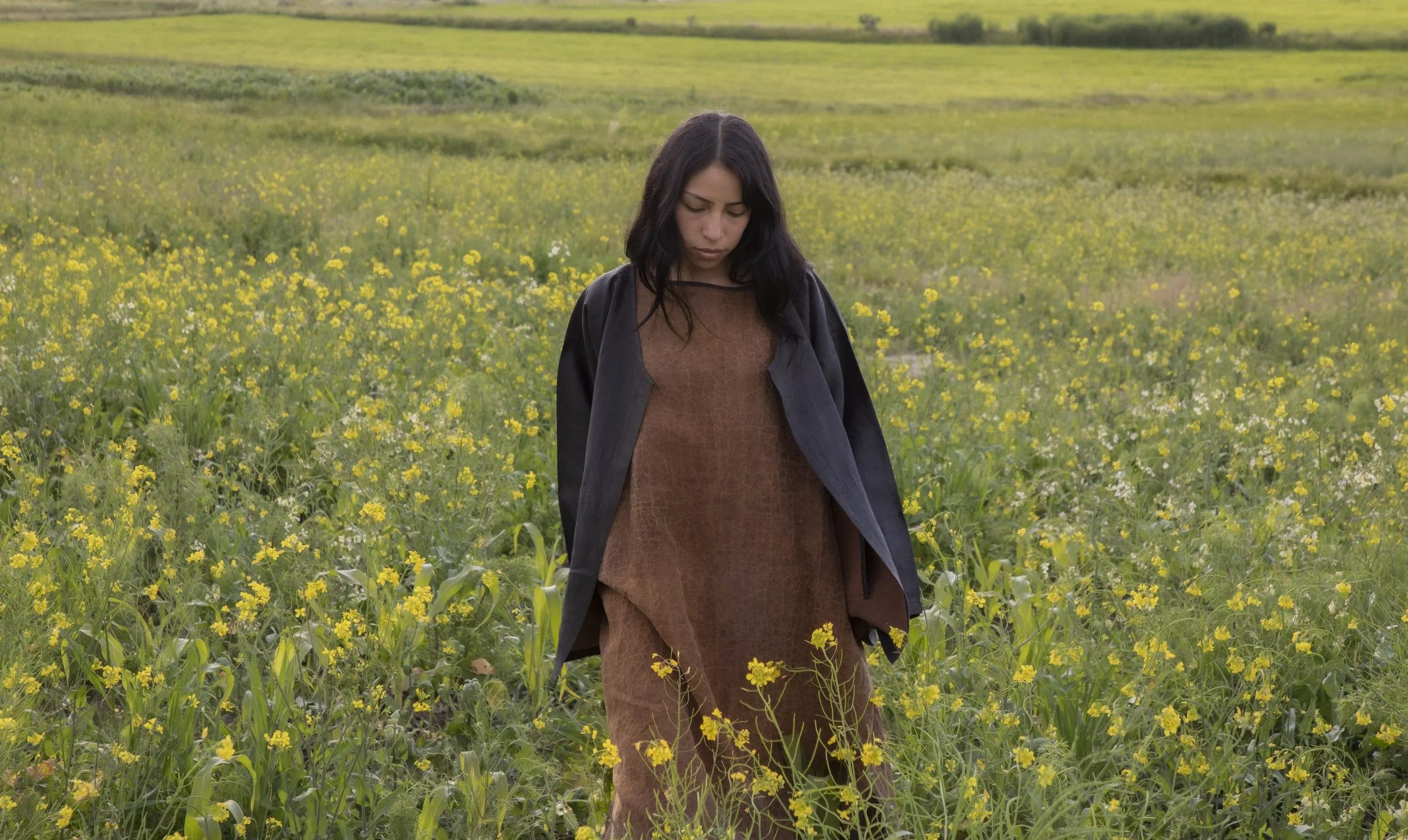


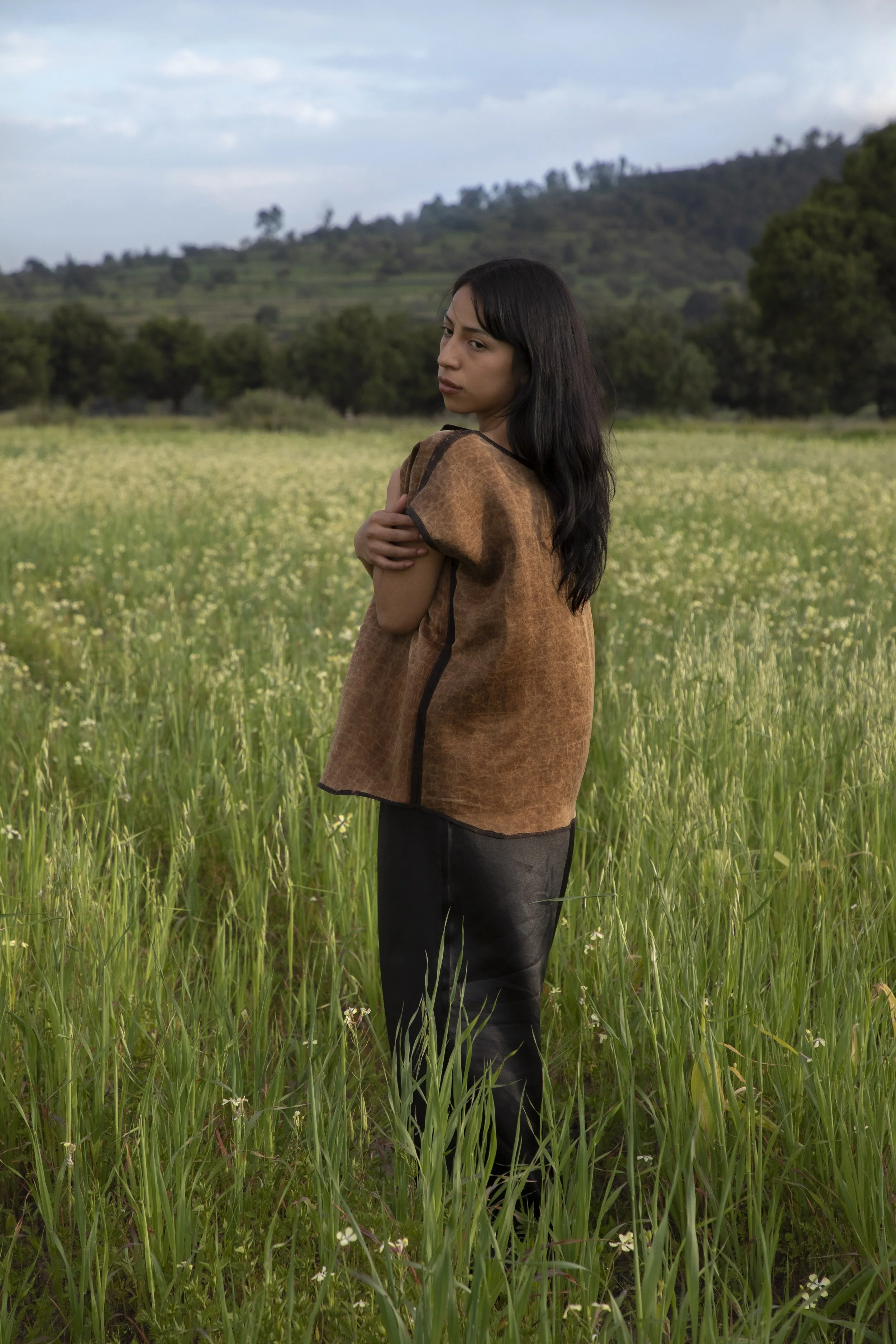
Sara’s practice, woven from her mestizo identity — a Nahua mother, a mestizo father — carries the dual inheritance of memory and translation. From Nahua cosmology and oral tradition, she learns that images are not captured but received. Her photographs recall that lineage: blurred, humid, carrying a pulse.
“Nature is not an entity separate from our existence. It is in the air, in the light, in touch, in food. It is in everything.”
Her nightscapes, rich in mist and chiaroscuro, belong to the same vocabulary as NOIR: matter speaking softly of origin, time staining what endures. What Sara sees, and what we see through her, is that beauty is not what light reveals, but what shadow remembers.
Model Lili S.


