
Juliette Baigné
The body as writing
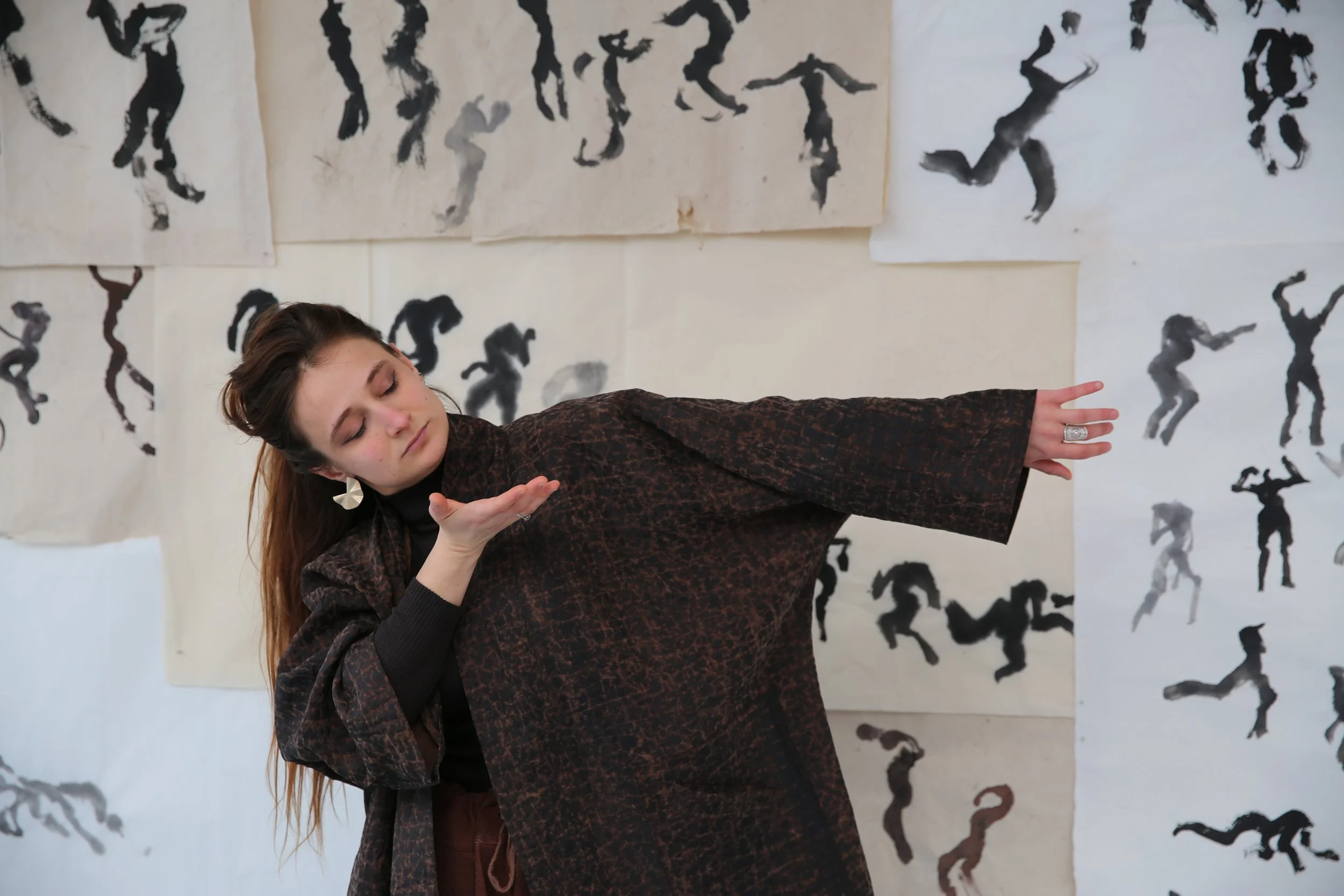
Juliette Baigné started drawing and dancing at the same time, at around four years old, and never stopped doing either. The body and the line arrived together. Today they meet in work that moves between calligraphy, performance, installation and scenography. Movement is her subject, and also the way she reads the world.
At the École des Arts Décoratifs in Paris, scenography gave her a way to hold everything at once: the body, light, costume, drawing, the people she works with. It also gave her a form that could change once someone stepped into it.
“I conceive of scenography as a living body,” she says. “I often perform within my own scenographies so that they can transform and evolve.”
Calligraphy came from somewhere earlier: five years of Chinese at school. Later, in the library of the Arts Décoratifs, she found a book by Carolyn Carlson and François Cheng where drawing and dance shared the page, and she saw her own work in it.
Dance still shapes how she composes. She works from the inside of a movement, from what the body knows about balance, position and space.
“I also see a correlation between a body on stage and a point on a sheet of paper: fundamentally, they are the same thing, a presence emerging from an empty space, charged with potential.”
Painting what cannot be danced
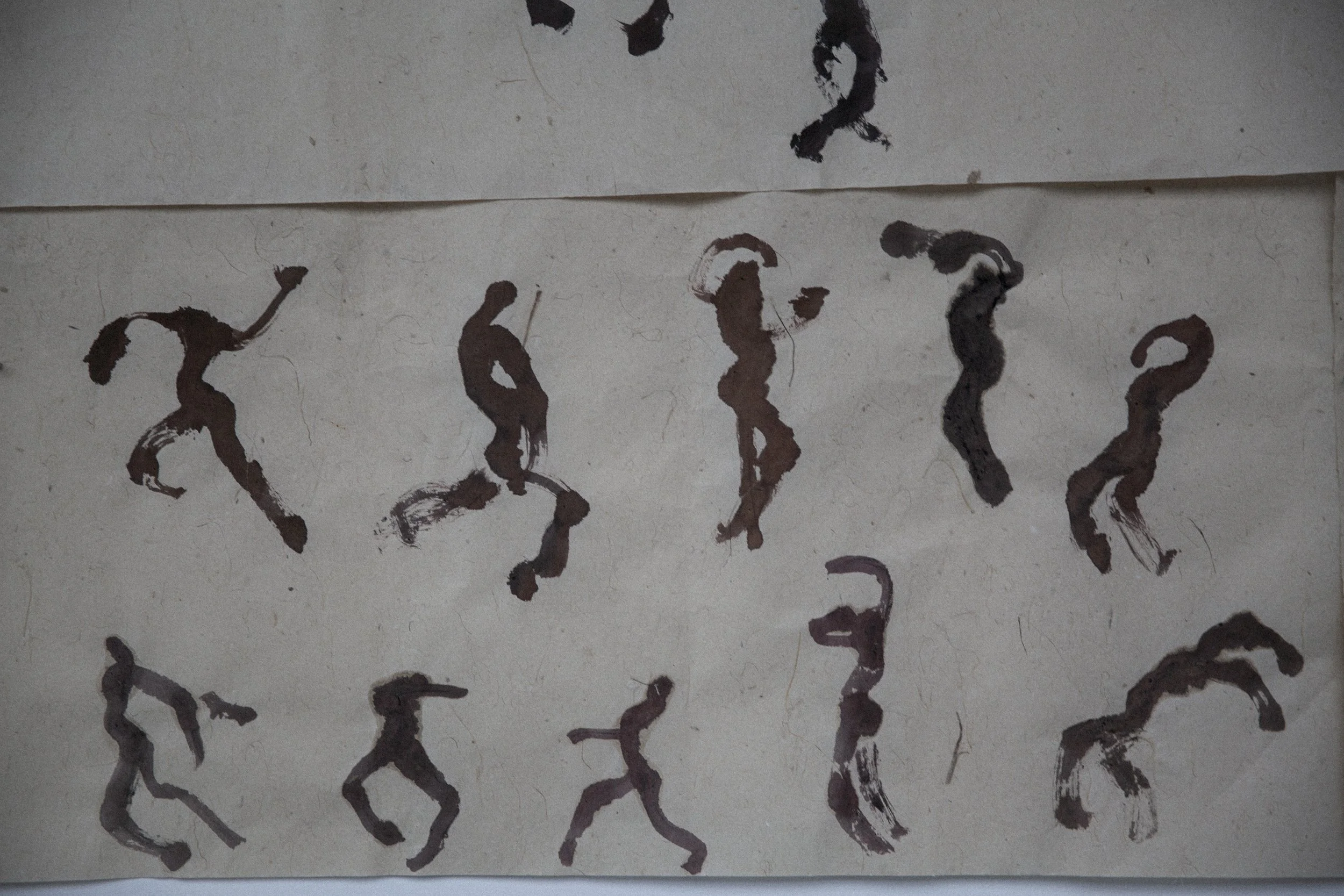
“I paint what I cannot dance,” she says.
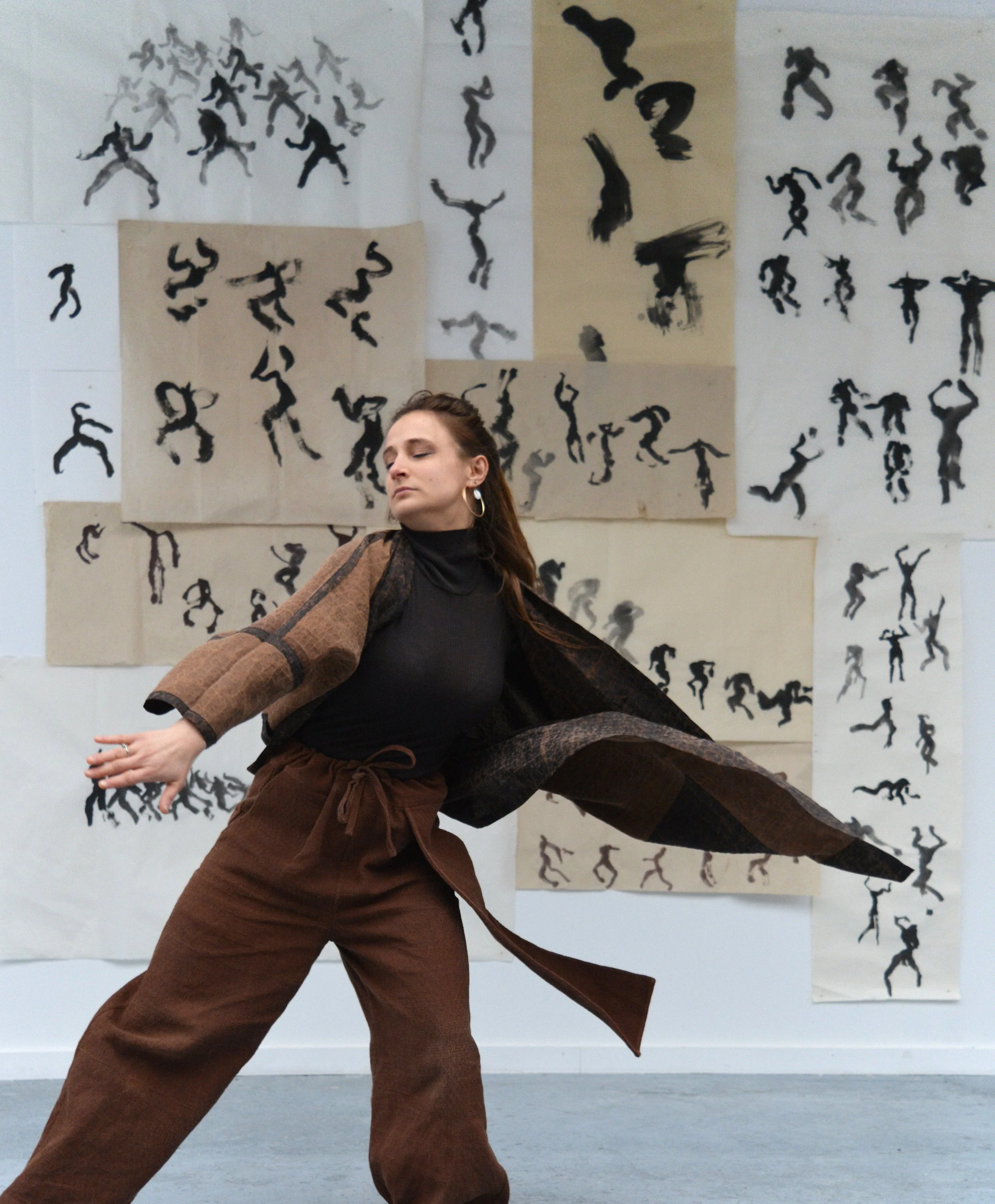
Watching dancers and athletes, she is caught by the moment a movement turns fluid, graceful and exact. What draws her is the freedom that comes after years of practice, when the body knows the way and can let go. Painting lets her approach movements she cannot make herself.
“My practice of movement calligraphy and dance converge in the sense that, for me, both celebrate the vitality that animates a body.”
That vitality rests on discipline. Daily repetition lays the ground for improvisation, and from there sensitivity and character come through. She finds the same thing in flamenco, krump and jazz, where a fixed structure leaves room for a personal reading. In painting she looks for that balance between mastery and abandon, elegance and power.
Ink asks for something else. It shows intention plainly, yet keeps part of itself out of the artist’s hands.
“Ink materializes an inner state: it translates it and gives it an anchoring in time and matter.”
A calligraphy of the living
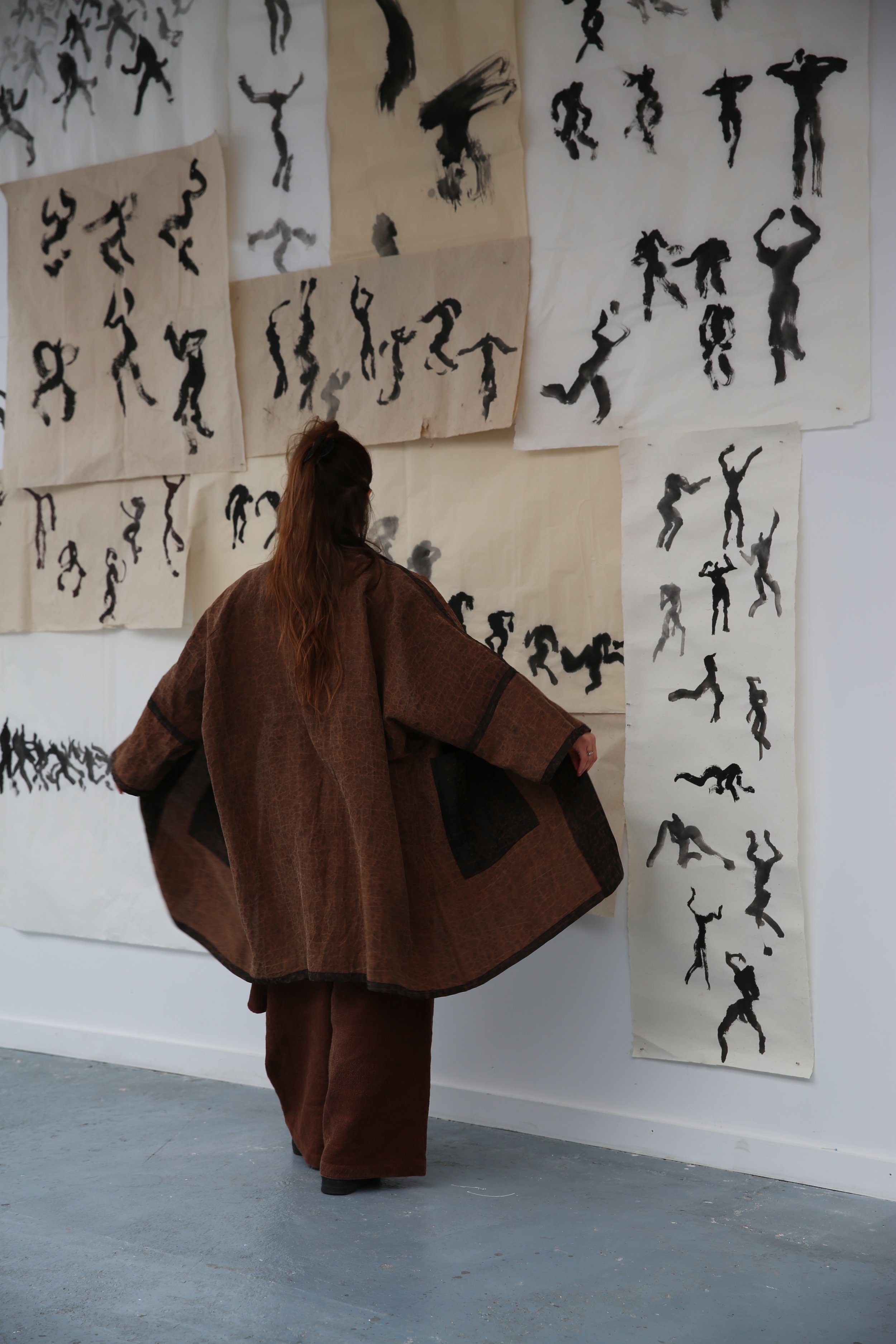
Her attention reaches past the human figure. She calls her research a “calligraphy of the living”: the movements of people, animals and plants read as a kind of writing. If bodies are letters, every living thing has its own script.
She is drawn to natural materials, to paper, wood and earth, and usually starts with her hands before she has an explanation.
“First, the body finds; the mind comes later.”
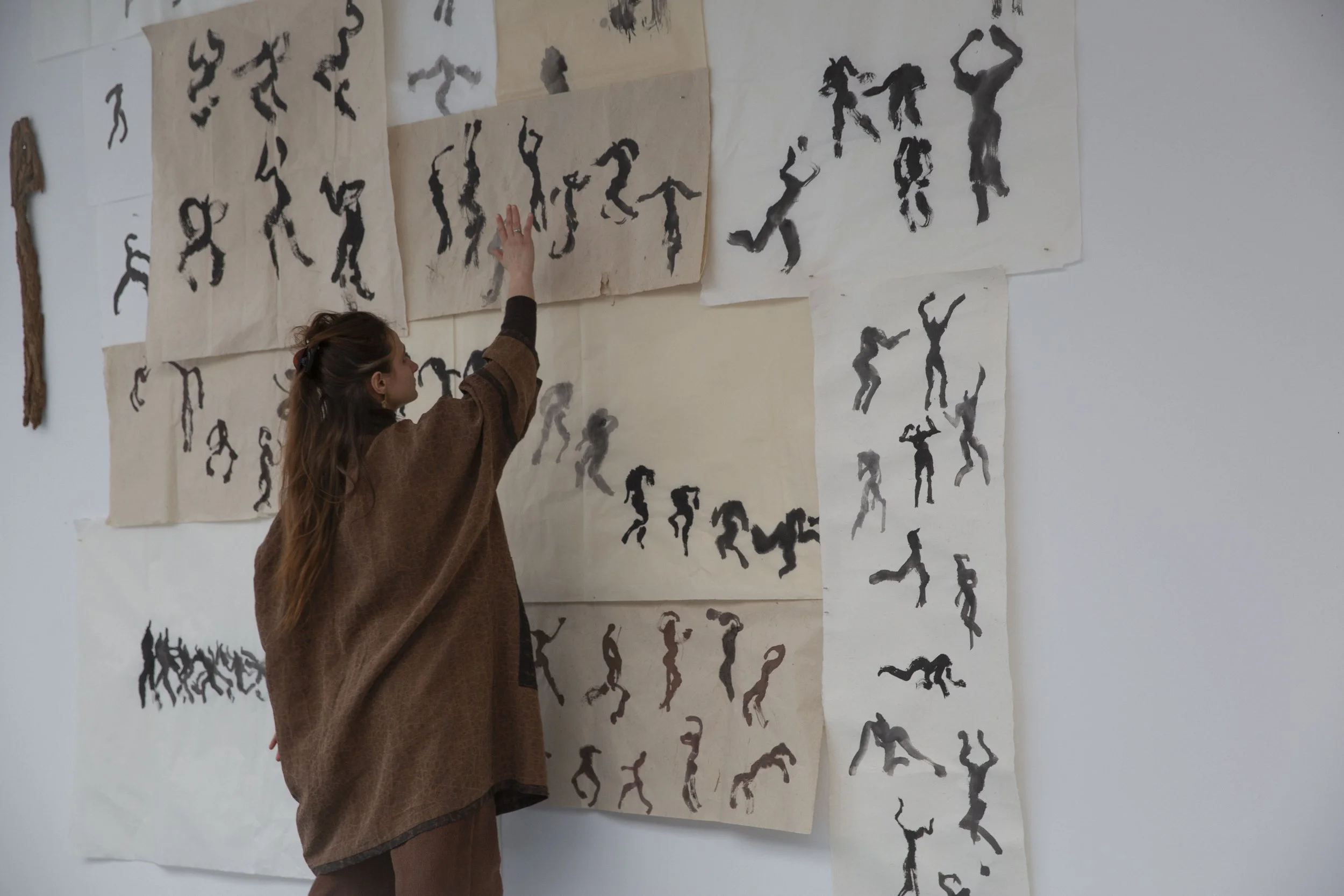
Space shapes the work too. Its scale, light, warmth and surfaces decide what can happen there. For someone who moves between the page and the stage, the room is part of the process.
Gratitude runs through her relationship with materials. Before she performs, she sits in stillness to centre herself. For a recent performance she set up an altar and bowed to what makes her work possible: fire and pine, for the soot in her ink; water, for paper and calligraphy; the goat, for her brushes; plants, for her paper.
“I see all of my works and my creative process through the lens of reverence, akin to the gesture performed at the end of a dance class to thank both the audience and the pianist.”
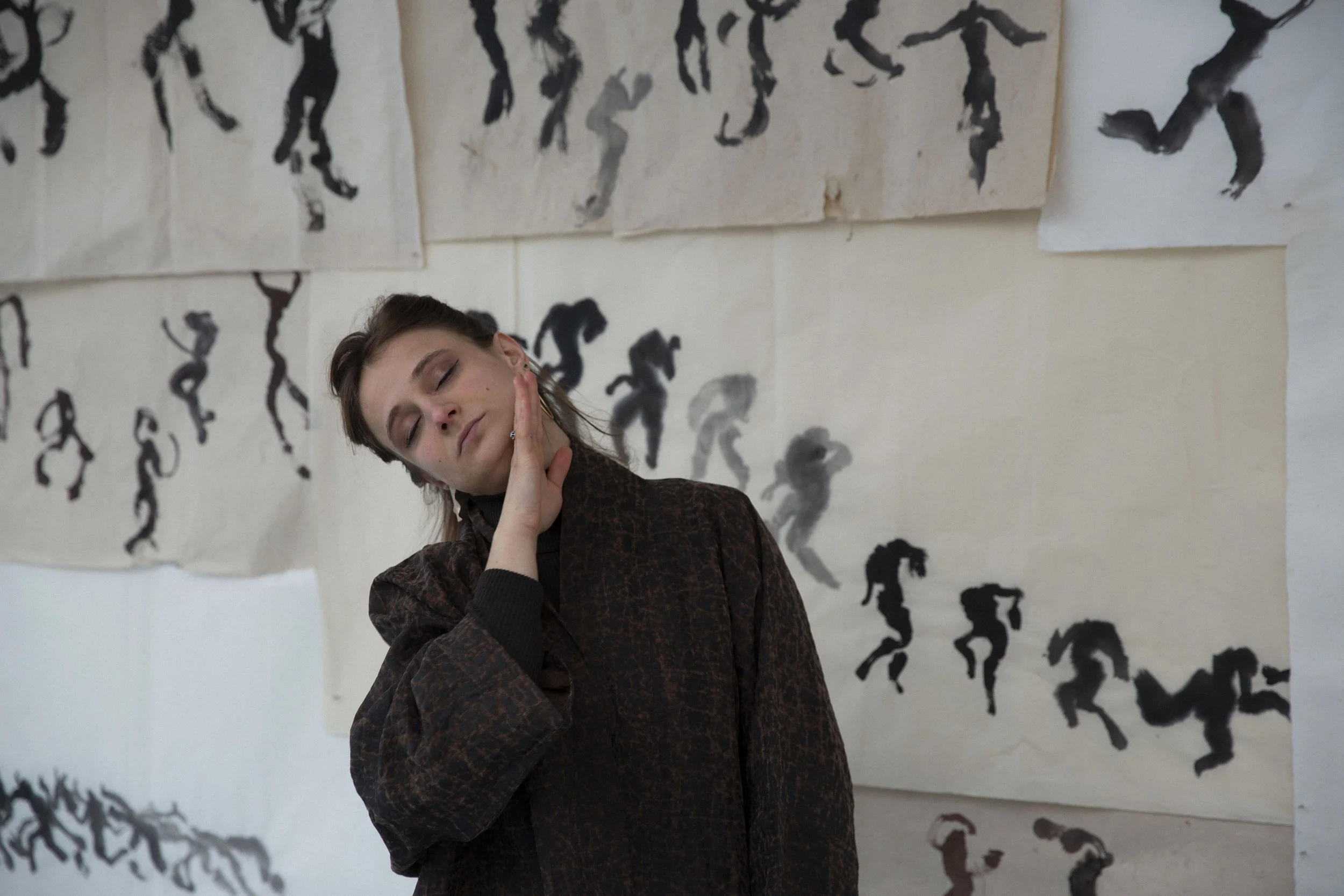
Learning to let a mark disappear
As her body of work grows, she is asking what it means to keep it, and what it might mean to let some of it go. She is thinking of returning calligraphies to the earth, of working with fire, of painting in water that vanishes as it dries.
These ideas are still taking shape, tied to “this notion of impermanence, of accepting loss, of not possessing.” They carry a question performance already asks: how to value a gesture that exists only for a moment.
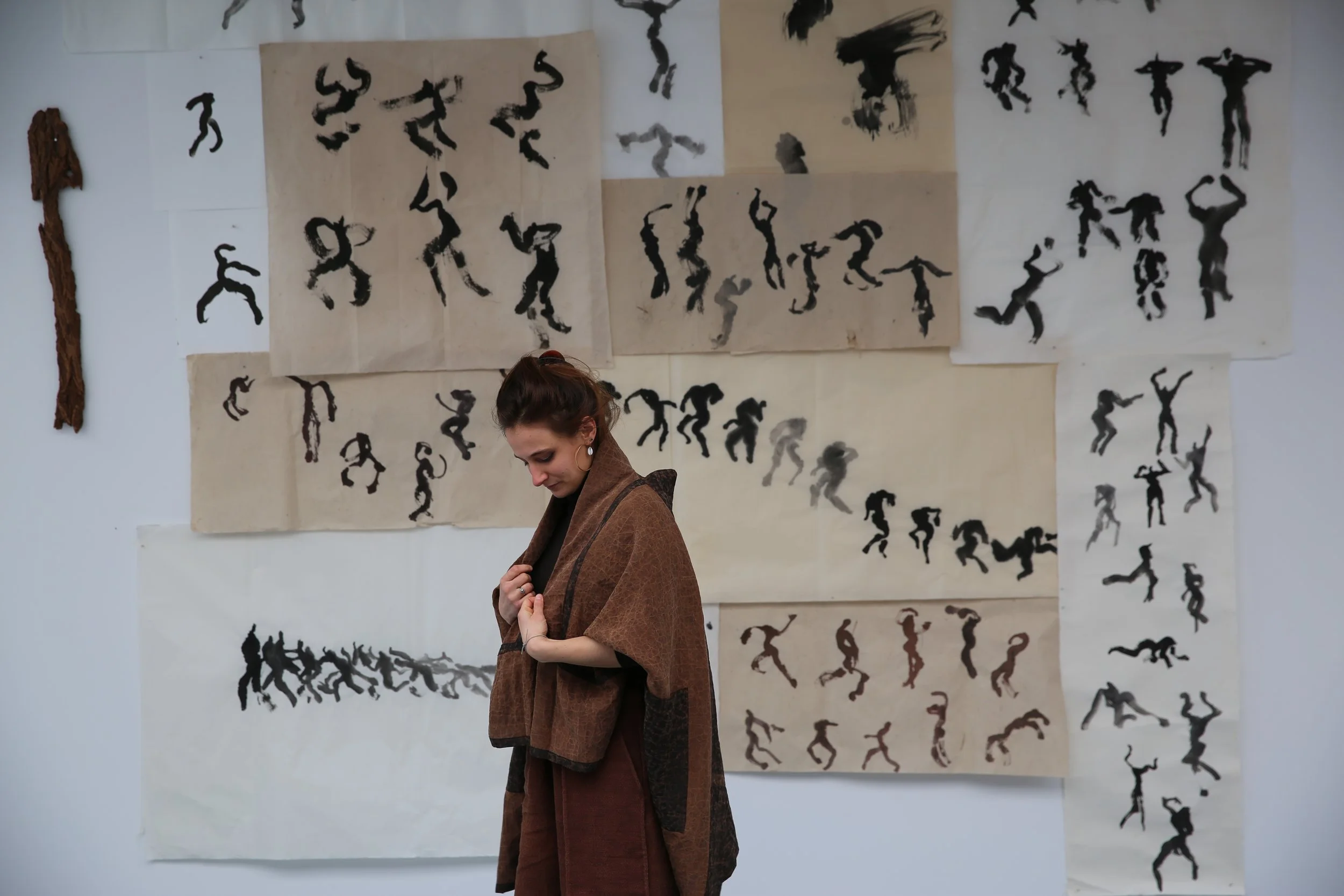
The body stays the starting point. It is where sensation, emotion and relationships take shape, and where experience leaves its marks.
“Everything is inscribed in the body, as in a book: life, illness, joy, all are written into the flesh.”
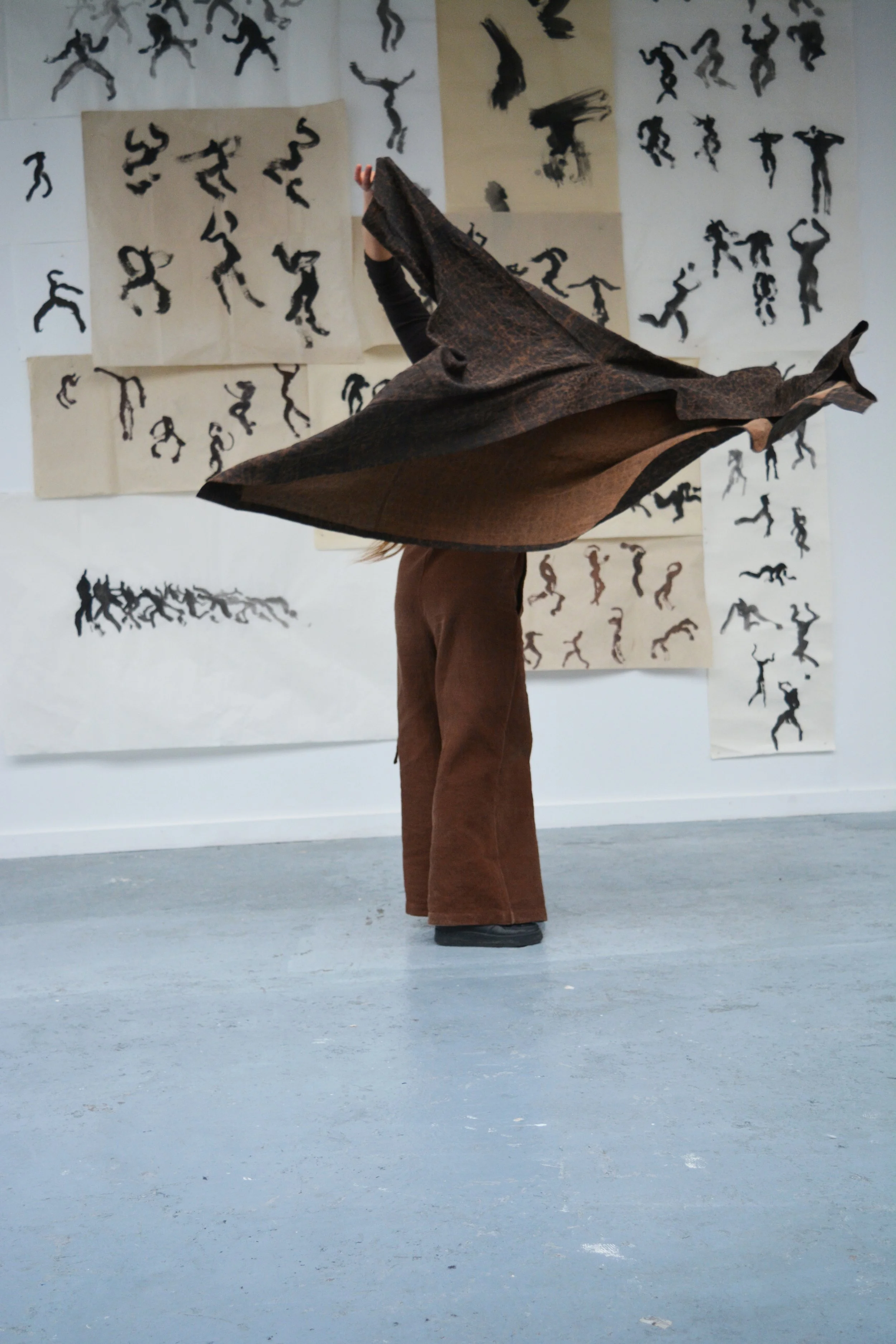
What she hopes people feel depends on the energy of each work. One gesture might bring peace, alignment, suppleness or suspension; another, momentum, struggle or visceral force. Either way the connection is physical: a painted movement that returns us to our own bodies.
Photographs: Âmes Nues